


For a young child, every new thing in life that mesmerize him needs to have an explanations. Whether in school or at home, he will not stop bothering anybody just to satisfy his curiosity and to get an honest answer. Below is my answers to a list of 15 questions my children once have asked me. Who knows, one of these days, your kids may also ask the same questions
Why is the sky blue?

Blue, blue the sky is blue. Why? It is due to the process called Rayleigh scattering. As sunlight reaches the earth’s atmosphere, it hits molecules present in the air thus scattering them in every direction. Frequency determines the amount of light scattered, as a result, blue light which has a high frequency is scattered many times more than other color. Thus, as more amount of blue light is scattered, then we have a blue skies during clear days.
Why do leaves turn brown in autumn?

Have you ever heard about photosynthesis? By means of chlorophyll that gives leaves their green color, plants store energy in the form of light and transform it to chemical energy. As autumn nears, falling temperatures and shortening daylight hours make trees to prepare for winter. Trees grow a corky membrane between the branch and the leaf stem, which obstruct nutrients to flow smoothly into the leaf. This process turn green leaf to turn yellow caused by the decline in the production of chlorophyll.
Why do we have bad breath in the mornings?

I know for sure that most people wake up with a bad breath. And the reason for this– the flow of saliva slows down during sleep and the unpleasant smell comes from anaerobic bacteria living in your mouth. Supply of oxygen decreases as we sleep, thus it allows bacteria to feed on leftover foods enabling them to multiply at a fast rate. Do you know where the unpleasant smell comes from– blame it to sulphur, which is often a waste product of the process.
Why do we blush?

Kids often asked this question when they see that someone’s face turned red. When you’re caught ashamed, in an awkward position, or simply embarrassed your body reacts by releasing certain amount of adrenalin. In return, adrenalin, makes blood vessels in your face to open up or relax a little, allowing the flow of more blood to your cheeks. As a result, your face darkens or turns noticeably red. Scientifically, blushing starts with an emotion – usually one associated with self-consciousness while sociologically, blushing may be useful as a means of communication, as it can act as a wordless signal.
Why do onions make you cry?
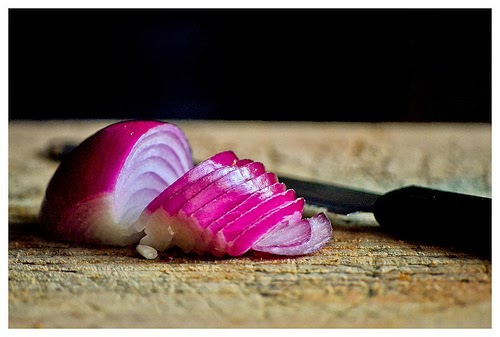
Slicing an onion a few feet away from your eyes will cause a weepy reaction. Slicing it through triggers a series of chemical reactions within the onion’s cell thus releasing a gas called as you sliced it through. This reaction releases a gas (propanethiol S-oxide) in the air. The gas then reacts with the water in your eyes to form a mild sulphuric acid, which causes itchiness. Therefore, the brain tries to solve this problem by producing tears to counter-act the irritant, thus protecting your eyes.
Why do we shake hands with people?

Handshaking traces its origin during the Medieval period where strangers offer their right hand (normally use to draw sword) towards one another as a gesture of peace and declaring that they intent no harm. Up to now, “shaking of hands” symbolize one’s intention of peace and agreement. signing a treaty to settling a bet with friends, “shaking on it” remains a symbolic sign of agreement.
Why do geese fly in a “V” formation?

Have you noticed how geese fly in flock? Geese do the “V’ formation with each bird flying slightly higher than the one in front of it. Somehow these birds have knowledge about aerodynamics– since flying in a “V” shape minimizes wind resistance in turn enabling each bird at the back to glide with ease. This way, each bird is visible and easy to tract and at the same time, the flock can fly longer since each bird has the chance to fall to the back and a fresh leg to lead the flock.
Why are there seven days a week?

Put your accusing finger to the Babylonian on why we have our seven-day week. Their mathematicians arrived at the idea that it takes 27.25 days for a full lunar cycle to occurs. These Babylonian Math geniuses also realized that the number 28 is a perfect number —it is the sum of all the numbers that divide into it (1+2+4+7+14 = 28). So they decided to have a month as 28 days long, and finally arriving at a month with four cycle of seven days.
Why are wedding rings worn on the fourth finger?

A very good question! This custom of wearing a wedding ring on the fourth finger traces back its origin to an old belief. As the belief goes– vena amoris (vein of love) ran directly from the fourth finger of the left hand to the heart. Therefore, they deemed ideal that a wedding ring be worn on the fourth finger which also symbolized a union of love. However, medical science proved otherwise, the veins running from the fourth finger are no different from those of any other finger. Nevertheless, we stick it out with the tradition of assigning the fourth finger as the “ring finger”.
Why is Friday the 13th unlucky?

The number 13 has long been treated by many as a bad or unlucky number. On the other hand, numerologists think that 12 is a “complete” number. Consider these facts: the 12 disciples of Jesus, the 12 tribes of Israel,12 gods of Olympus, 12 Zodiac signs, and 12 months in a year. So these number experts consider exceeding 12 by 1 is associated with bad luck. The most apt explanation on why Friday the 13th unlucky will bring us back to the Crusades days where as history tell that then King Phillip of France with the connivance of the Pope, ordered the arrest and later on the persecution of the famous “the Knights Templar” on Friday October the 13th, 1307.
No wonder that many are engrossed with this unlucky Friday the 13th idea that many skyscrapers’ don’t have a 13th floor, many hospitals and hotels have no room number 13 and you will find it hard to locate 13th Street in many cities. Also, some people are being paranoid about the number 13 to the extend that some stay at home rather that going to work, others will refuse to have their flight on the 13th, some even cancelling buying a house!


