The Philippines is blessed with more than 500 medicinal plants, and below is another list of 10 medicinal plants approved by the Philippine Department of Health (DOH) as an alternative medicine in treating particular disorders.
Baino–Nelumbo nucifera Linn.–Sacred Lotus

Sacred lotus is very large perennial water herb growing vertically to about 150 cm. The prickly leaf stalk develop 30-60cm and the blades 40-90 cm long. Young blue-green, round leaves float on the surface then the mature ones stand above the water. The long-stalked yellow, flat-topped flower about 10-20 cm wide, develops into an 8cm brown seed capsule. On the top, the spongy top-shaped receptacle cavities( up to 12 big holes) hold smooth, black, egg-shaped oval shaped, about 2 cm long ripe carpel (fruit and seed in one). In the Philippines, it is abundant in shallow lakes and marshes and cultivated as pond ornamentals. For medicinal use, all parts are utilized.
Medicinal uses:
* Roots, rhizomes, and flowers are used as rejuvenating tonic and as astringent.
* The leaves and seeds are used in poultices.
* Flowers, filaments, seeds are used against fever, bronchitis, cholera, diarrhea, skin eruptions, liver complaints, insomnia and snakebites.
* Pounded leaves used to ease skin irritation and halitosis, lower fever, and soothe inflamed mucous membrane.
* Flower stalk or syrup made from the flowers are used to stop dysentery, menorrhagia, and internal bleeding caused by gastric ulcers.
* Rhizome’s node and stamen are used to stop bleeding.
* Young leaves stems, and roots used for piles, vomiting, parasites and leprosy.
* Decoction of floral receptacle ease abdominal cramps, bloody discharges.
* Decoction of flowers used against spermatorrhea, syphilis and premature ejaculation.
* Paste of root starch used for ringworm and other fungal infections
Balanoy — Ocimum basilicum — Sweet Basil

Common or Sweet Basil is an annual herb which grows to an erect length of about 3 feet high is cultivated worldwide as a flavoring herb in many cuisines. The leaves of balanoy or common basil which emit a spicy, clove-like aroma are oval-shaped, dark green beneath and have slightly-toothed edges. The stem is obtusely quadrangular, the labiate flowers are either white or purple and are peculiar in having two lips. Balanoy is sporadically cultivated throughout the Philippines and prefers warm and moist habitat. The plant’s leaves and seeds are utilized for medicinal purposes.
Medicinal Uses:
* Basil tea can be used to ease fever and cough.
* Decoction of leaves helps in controlling nausea, vomiting and hiccups.
* Leaf juice helpful for coughing up and expelling phlegm.
* Basil tea helps in expelling gas pains.
* Poultice of crushed fresh leaves is effective against snake bites.
* Decoction of leaves and roots combats gonorrhea.
* Decoction of leaves in bath effective for rheumatic pain and skin ulcers.
* Applying juice of crushed fresh leaves cures insect bites and ringworm.
* Decoction of seeds ease constipation, and postpartum pains.
* Basil tea good for delayed menstruation and is also used in the treatment of external eye problems.
* Juice made from crushed fresh leaves and inserted into tooth cavity is effective for toothache.
* Poultice of seeds effective against mouth and cheeks sores.
* Applied externally, decoction of dried leaves used for acne.
* Sniffing crushed fresh leaves eases dizziness.
Balatong — Phaseolus aureus Roxb.– Mung Bean

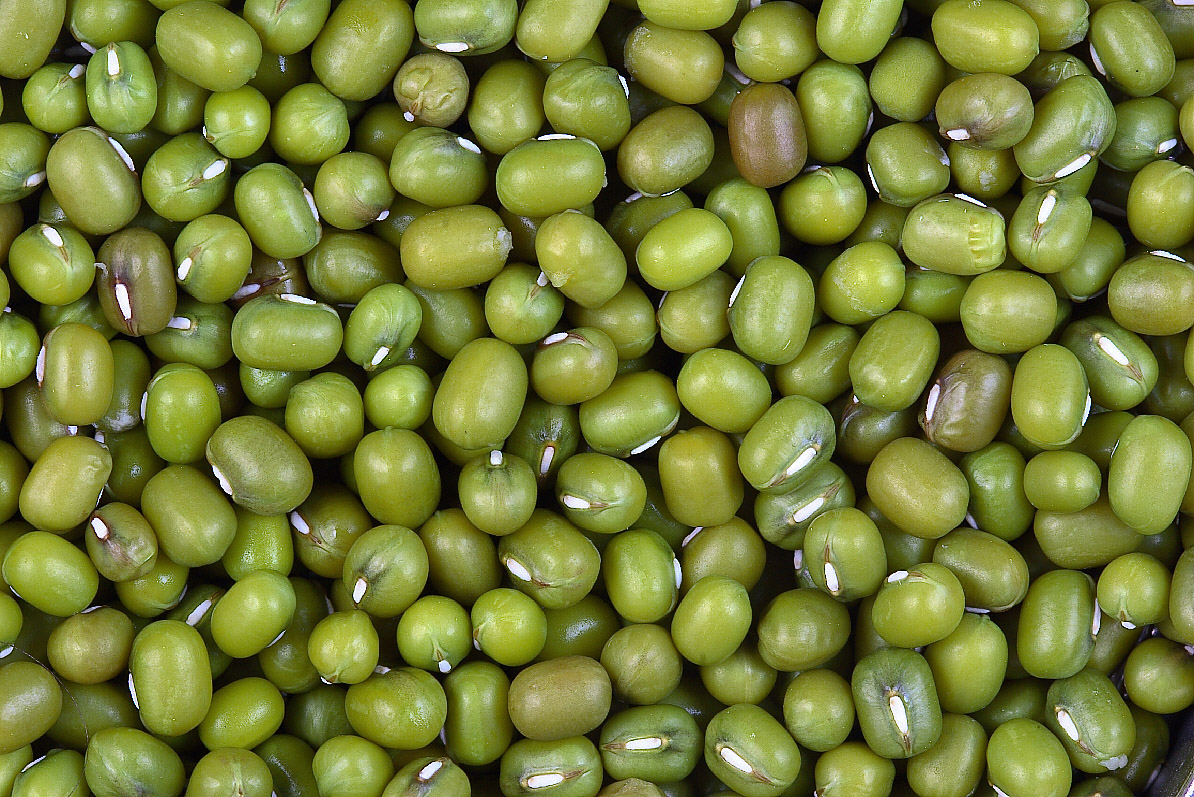
A mung bean plant is an erect or semi-erect annual herb reaching 15 – 130 cm long. It has trifoliate leaves that are ovate and entire. Mung bean bears greenish to yellow flowers about 1 cm long. It produces a bunch of slender, blackish, hairy pods about 10 – 15 cm long. The seeds are 4-6 mm in length.
Medicinal Uses:
* It prevents prickly heat, heatstroke and heat rash.
* Decoction of roots used for bone pains.
* Eaten as soup or congee can expel toxins.
* Decoction of seeds used for rheumatism and other related nervous system diseases.
* Boiled seeds used in poultices.
* The seeds are used for hemorrhoids and liver afflictions.
* Powdered beans used in treating burns, skin ulcers and effective in promoting suppuration.
* Seeds used in anorexia.
* Seeds used for acne, boils, sores and blackheads.
Banaba — Lagerstroemia speciosa Linn.– Queen’s Flower

Banaba is a deciduous tropical flowering tree that grows up to 20 meters in height. It has large green oblong leaves about 30 cm long. The plant sheds leaves that red or bright orange during the early months of the year. It bears racemes pink to lavender flowers from March to June. After flowering, it bears large clumps of brown bears nut-like fruits about 0.5 inches. Banaba plant is widely distributed in the Philippines, and is cultivated for its beautiful flowers. For medicnal purposes, the plant’s leaves, fruits, flowers and bark are used.
Medicinal Uses:
* Concoction of bark/roots helps ease diarrhea and other stomach ailments.
* Banaba tea effective in combating diabetes, kidney, bladder, dysuria and urinary problems.
* Concoction of leaves and flowers eases fevers. and as diuretic.
* Leaf concoction helps ease urination.
* The leaves, flowers and bark helps in controlling loose bowel movements.
* Tea of the leaves is used for weight loss and helps regulate blood pressure.
Bataw — Dolichos lablab Linn.– Hyacinth Bean

Hyacinth bean is a climbing or twining vine about 4 to 6 m long, with purple flowers and pods. Also, the leaflets are purplish green and triangular in shape about 3-6 in long. The flowers are arranged in loose clusters on long stems, while the pod are small, smooth, and flat 2-3 inches long containing 4-6 seeds that may be red, brown, or white.
Medicinal uses:
* The stem is effective in treating cholera. * Concoction of leaves used for colds, fever, cough, high blood pressure and skin diseases.
* Concoction of leaves eased gonorrhea.
* Poultice of leaves for headaches, dizziness, snake bites.
* Concoction leaves used for hepatitis, diarrhea, rheumatism, spasms, colic, and burn wounds.
* Juice of the leaves applied abscesses and tumor.
* Juice from pods mixed with salt effective against sore throat and ear inflammation.
Seeds used to stop nose bleeds.
Buntot ng Kabayo –Equisetum arvense — Horse Tail

A ferny perennial with jointed rootstocks. These horsetails have simple and erect stems reaching up to 80 cm tall, 3-5 cm in diameter branched. Bulbs or Rhizome appear like a string of beads.
Medicinal Uses:
* Decoction of stems used externally to stops bleeding and for wound healing.
* Effective in easing diarrhea, liver problems, heavy menstruation, infection of the urinary tract and prostate disorders.
* An excellent astringent in reducing hemorrhage.
* Decoction used hair rinse, sprains and skin diseases.
Bulak-manok — Ageratum conyzoides Linn.- Billy Goat weed

Billy goat weed is an erect, slender, common perennial tropical herbaceous weed growing up to 2.5 feet tall. The stalked, alternate, hairy and aromatic smelling leaves are about 4-11 cm long, and 1 to 5 cm wide. The stem is often red and has long white hairs, while the dark seeds have scales and often serrate below. The flowers are small with numerous flowering heads. For medicinal purposes leaves, young stems and flowering tops are used.
Medicinal Uses:
* Every part of the plant as a decoction is used for the treatment of fevers, colds, cough, and high blood pressure.
* Decoction of leaves used for eczema, furuncle and external wounds.
* Poultices for headaches.
* Juice from fresh parts used for treating otitis media.
* Also used to ease dizziness, dysentery, and hepatitis.
* Decoction of leaves used for headaches, burn wounds, colics, rheumatism.
Bagasua — Ipomoea pes-caprae (Linn.) Roth — Beach Morning Glory

A smooth, perennial creeping vine rooting at the nodes. The leaves are alternate, elliptical in shape with broad base can reach 4.5cm in length. Flowers are either angular or flattened, light purple, are up to 3-16 cm in diameter. The Stem or stalk is erect and carries 1-6 flowers that opens one at a time. Seeds are covered with hairs.
Medical Uses:
* Roots are eaten raw to ease stomach aches.
* Decoction of leaves used for rheumatism, bladder disease.
* Boiled leaves used externally for colics.
* Paste of leaves used for boils.
* Seeds alleviate cramps and stomach pains.
* Boiled tubers used to treat intestinal parasites
Buli — Corypha elata Roxb.– Buri Palm

Buri Palm is the largest of the Philippine palms. They flower only once in their life, producing plentiful rounds fruits and die after. Buri palm has erect and straight truck growing up to 1 meter in diameter and reaching up to 20 m tall. It has huge and fan-shaped leaves reaching 3 meters long. Also, Buri palm has pyramidal inflorescence grows up to 7 m high. The plant bears numerous greenish-white flowers about 5-6 mm in diameter. It has fleshy, round-shaped fruits about 2-2.5 cm in diameter.
Medicinal Uses:
* Decoction of young plant used for fever, colds and runny nose.
* Starch effective for treating bowel disorders.
* Juice made from roots eases diarrhea.
* Chewing fresh roots good for coughs.
Balbas-bakiro – Momordica cochinchinensis Lour.– Spiny Bitter Cucumber
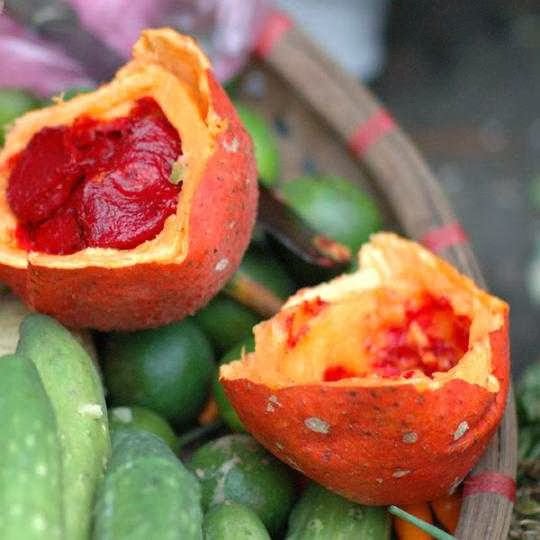
A climbing or trailing dioecious vine starting from a tuberous root, often reaching 15 meters long. Leaves are mostly egg-shaped about 8-128 cm long, divided into 3-lobed with pointed tip. The fruit is large, 8-12 cm in diameter, yellow turning red at maturity. Seeds are large, flattened, and contain an oil that is used as an illuminant. Medicinal Uses:
* Decoction or pulverized seeds used for coughs.
* As a substitute for soap, roots are effective against head lice.
* Plaster made from roots stimulates hair growth.
* Seeds and leaves are mild laxative.
* Seeds effective for ulcers, hemorrhoids, wounds, bruises, swelling of the neck, mammary abscesses.
* The seed membranes can help promote healthy vision.
* Also used for liver and spleen disorders.
Related Posts:
The Philippines Most Promoted Medicinal Plants
Philippine Medicinal Plants Part 2