Sliders

Showing posts with label alternative medicine. Show all posts

Saturday, May 2, 2015

Six Surprising Foods that are Proven Pain Reliever

All of us have experienced pain at some time. There are dozens of 'pain reliever' available in the market. But before you rush to buy one to treat your sore back, achy joints, or painful arthritis; why not consider some of these pain-fighting foods.

Salmon

photo link

For joints, back, Neck

Salmon is rich in omega-3 essential fatty acids which reduce levels of inflammation in the blood vessels, joints and elsewhere in the body. Several studies have shown that these essential nutrients can reduce joint swelling, pain and morning stiffness in patients with rheumatoid arthritis.

Studies have also shown that intake of omega-3s reduce pain associated with menstrual cramps, headaches and even neck and back discomfort. Wild-caught salmon, fresh or canned, is healthier than farm-raised salmon, which may contain toxic chemicals depending on the conditions they’re raised in. Two-servings a week of salmon or other cold-water fatty fish like sardines, anchovies, herring and trout are recommended.

Cherries

photo link

For Achy Joints and Exercise Soreness

Research done at Michigan State University found that the antioxidant and anti-inflammatory compounds in tart cherries—called anthocyanins—have powerful pain-fighting power. In fact, lead researcher Muralee G. Nair, Ph.D., Professor at Michigan State University College of Agriculture & Natural Resources, said cherries are “as good as ibuprofen and some of the non-steroidal anti-inflammatory drugs.” Dr. Nair suggests that eating 20 tart cherries can significantly reduce inflammation related discomfort. You can use frozen or fresh cherries, the darker the better.

Ginger

photo link

For Chronic Knee Pain

Long used as a remedy for travel sickness, nausea and indigestion, ginger is also an effective pain reliever. In one study, University of Miami researchers found that almost two-thirds of patients with chronic knee pain had less soreness after taking a ginger extract for six weeks. In another study, Dr. Krishna C. Srivastava of Odense University in Denmark gave arthritic patients small amounts of ginger (5 grams of fresh ginger or 1 tsp of dried ginger) every day for three months. Most of those studied showed significant improvements in pain and morning stiffness.

Turmeric

photo link

For Sore Joints

Frequently used in curry and other Indian dishes, the yellow compound in turmeric, curcumin, contains powerful anti-inflammatory and pain-relieving properties. A study published in 2009 in “The Journal of Alternative and Complementary Medicine” compared curcumin with ibuprofen for pain relief in more than 100 people with knee osteoarthritis. Researchers found that curcumin was just as effective as ibuprofen for improving function and pain in those suffering from the disorder.

Papaya

photo link

For Back Pain

Papaya, a sweet exotic fruit, contains an enzyme called papain that not only improves digestion, but is an effective anti-inflammatory. It is so effective that some doctors even use it in injections for back pain. In addition, the fruit is high in antioxidant vitamins A and C which are good for reducing diseases that are worsened by inflammation such as osteoarthritis. Easy to eat (just spoon it out of its skin), you can add papaya to salads or smoothies or make it into a salsa. Or eat half a papaya spritzed with juice from a lime wedge as a breakfast treat.

Tahini

photo link

For Headaches

Tahini, a spread made from sesame seeds, is a rich source of magnesium, which has been shown to keep headaches—especially migraines—at bay. Some studies have linked migraines and chronic headaches with a magnesium deficiency. A daily dose of two tablespoons of tahini can be spread on toast. However, be careful how much tahini you eat since it is high in fat.

Tuesday, June 10, 2014

The Bible’s Seven Wonder Foods

Are there wonder foods mentioned in the Bible? The answer is Yes! In Deuteronomy 8:8, God promised the Israelites as they reached the Promise Land that it was “a land of wheat and barley, and vines, and figs trees, and pomegranates; a land of olive trees and honey.”

At that time, the word “antioxidant” might have been a strange word for them, but they were about to add into their diet a list of biblical “super-foods.” Read on to know more details about these wonder foods.

Wheat

photo link

Considered the World’s most important grain, wheat offers tremendous health benefits. Wheat is a major ingredient in making bread, cakes, crackers, pasta and muffins. This grain is rich in vitamins A, B, E, K, D, manganese, magnesium, calcium, potassium, zinc, cobalt, sodium, among others. Adding whole-wheat products to your diet ensures a diet rich in proteins. Regular consumption of 100% whole-wheat food items offer 30% of the body’s daily fiber need. Also, these products have high amount of magnesium and manganese.

Below are some more health benefits from eating wheat-based food:

* Whole-wheat has fat essential acids helpful in lowering cholesterol level and blood coagulation, which decreases the risk of heart-related diseases.
* A whole-wheat rich diet regulates the body’s blood glucose, which decreases the risk of type-2 diabetes.
* Consuming whole-wheat products prevents visceral obesity.
* High in fiber contents, whole-wheat consumption decreases the risk of cancer.

Barley

photo link

Barley is another type of healthy whole grain, found in cereals and bakery items such as breads, pastry and cakes. Since ancient times, barley is used for medical purposes. Barley is rich in vitamins, proteins, amino acids minerals as well as fiber that is vital to our health.

Below are some health benefits of barley:

* A regular diet of barley aids in lowering cholesterol level, thus reducing the risk of type-2 diabetes and colon cancer.
* Regular consumption of barley prevents rheumatoid arthritis and obesity.
* Barley also helps in weight loss thus prevents obesity.
* Regular intake of barley, reduces high blood pressure and other heart diseases.
* Barley alleviate asthma, fever, stomach pains and ulcers.

Grapes

photo link

Aside from the healthy red wine and grape juice, grapes have other health benefits. High in falconoid and antioxidants, grapes reduces the risk of cardiovascular disease and blood clots. Grapes are rich in potassium, magnesium, calcium, iron and other essential minerals as well as vitamins like A, C, B6; nutrient the body needs.

Here are other health benefits of grapes:

* Grapes ease asthma.
* Grape juice alleviate migraine, eases constipation and dyspepsia.
* Grape juice is also a good energy booster and boost immune system.
* Regular consumption of grapes reduces the risk of muscular degeneration and impairment of vision caused by aging.
* Grapes have anticancer properties since grapes contain resveratrol
Red wines have antiviral properties that prevent infections.

Figs

photo link

These sweet but seasonal fruit, is a good source of vitamins including A, B1, and B2, as well as mincemeats like calcium, potassium, sodium, manganese, iron, chlorine and phosphorus, manganese, sodium, potassium and chlorine. Since figs are also rich in dietary fiber, adding figs to your diet aids in weight loss.

Below are other health benefits of figs:

* Figs boosts memory power.
* Figs prevents indigestion, constipation, cough, sore throats, asthma, anemia and diabetes.
* Figs contain Pectin that helps in reducing cholesterol level and prevents hypertension.
* Prevents heart diseases, breast cancer and colon cancer.
* Prevent vision loss and macular degeneration caused by aging.

Pomegranate

photo link

These reddish-pink fruits are also pack with several health benefits. Among the health benefits are:

* Pomegranate is good in treating sun burns, sore throats, colds, cough, skin disorder and urinary infections.
* Pomegranate is rich in antioxidants that stop blood clots and lowers the risk of Alzheimer’s.
* Pomegranate juice lowers cholesterol levels and prevents heart attacks.
* Pomegranate is also good in the treatment of anemia, arthritis and diabetes.
* Studies showed that pomegranates prevent breast cancer.

Olive Oil

photo link

When picking fats, olive oil may come first in the list of good oils. It has monounsaturated fat that lowers LDL levels in the blood helpful in reducing the danger of heart disease. Olive oil is also rich in vitamin E that reduces the risk of colon cancer.

Other health benefits of olive oil includes:

* Relieve gastritis and ulcer.
* Prevents gallstone formation.
* Lowers blood pressure.
* Lower blood sugar level.
* Ease asthma and arthritis pain.
Promote normal body weight.

Honey

photo link

Since a good source of carbohydrates, raw honey provides the body the energy it needs as well as boosting the immune system.

Drinking or adding honey to your diet offers other health benefits such as:

* Honey is a common home remedy for treating sore throats, asthma, arthritis pain and even athlete’s foot.
* Honey also prevents swelling and inflammation from wounds, cuts, or burns
* Honey is a good cleansing tonic that helps maintain a healthy digestive system.
* Studies showed that honey can prevent hair loss.

Sunday, May 18, 2014

12 Surprising Health Secrets of Lemons

We all know that lemon has plenty of health benefits. It is packed with citric acid, vitamin C, pectin, calcium and magnesium that boost the body’s antibacterial and antiviral powers. Whether you eat it fresh, drink in as juice or teas, lemon is full of natural healing power. Here are 12 health facts about lemon you probably didn’t know.

photo link

Do Away with Stubborn Acne

Packed with vitamin C and citric acid, lemon is effective in controlling acne and provide our body with glowing skin. Drinking a glass of lemon juice every morning gives such healthy result. Treating acne –here are some do-it-at-home acne treatment you can try:

Dip a cotton ball on a fresh lemon juice and apply it on the affected areas and let it stay overnight. Cleanse it with lukewarm water the next morning. During the first few days, one can experience irritating sensation of burning, but as the skin adapt to the treatment the sensation will disappear.

You can also prepare a mixture of equal parts lemon juice and honey water, Apply adequate amount of mixture on acne areas for about half an hour. Then wash with water. To attain positive result, do this application twice a day (morning and evening).

Warning – If there are open wounds or the acne is severe, it is best to consult your doctor before applying these treatments.

Cool Down Anxiety

Are you feeling tense, nervous, anxious, exhausted or losing your concentration? Lemon balm and lemon oil demonstrate calming effect that may help you feel better. According to some studies, lemon balm and lemon oil demonstrate calming effect that is useful in fighting and overcoming these moods. Make you room in amiable working environment by making lemon oil as room freshener.

Goodbye Canker Sore

Bothered by canker sore, just do this medication and canker sore will bother you no more. Squeezed one or two fresh lemons, get the juice and add the juice into a glass of lukewarm water. Afterwards, rinse your mouth using this mixture. For better result, do this routine thrice a day. Lemon’s proven antiviral and antibacterial properties can speed up the healing process.

Ease Fever, Flu, and Cold

Lemon has shown healing power against fevers. Here is one effective homemade medication to try: Add the juice squeezed from one fresh lemon into a cup of hot water mixed with honey. Drink the solution at once and do it every 2 hours until such time that the fever subsides or the virus is eliminated.

photo link

Relieves Sore Throat

Try putting together a mixture of 1 teaspoon of sea salt, juice squeezed from 1 lemon into a cup of lukewarm water. A perfect gargle solution to take thrice a day for 1 minute. If you are dealing with tonsillitis, then do the procedure every 2 hours for about half a minute.

Remove Corns and Calluses

Applying lemon poultices overnight can cure corns and calluses. Just put a slice of lemon about 5 mm thick on to that stubborn corn, wrap with bandage and fasten securely. Also, to facilitate the healing process, you can use cotton balls, moisten with essential lemon oil and dabbed it on the affected area.

Effective Against Eczema

A solution of 1 tablespoon liquid honey and about 7 drops of lemon oil added into 1 cup lukewarm water can give relief from eczema. Soak a clean linen cloth in the solution and gently dab it in the affected area for about 15 minutes. Do this application twice a day.

Rid Halitosis

Worrying about bad breath caused by consuming cigarettes or drinking alcohol, lemon can keep your breath fresh. Prepare a solution by squeezing the juice of 1 lemon and add it into a glass of lukewarm water. Gargle the solution several times a day. Also, eating a lemon after each meal will keep fresh breath.

photo link

Relief From Bug Bite

Itching because of big mite? First, remove the stinger out of the skin then massage the affected area with a solution made from 1 teaspoon of honey and 2 drops of essential lemon oil. To keep away insects, spray into the air a mixture of 1 cup water and 20 drops of lemon oil. Another effective home remedy to get rid of bugs is to place a lemon oil-soaked cotton ball in your bedroom.

Thursday, May 30, 2013

Philippines Medicinal Plants Part Three

Part Three in a series of articles about the Philippines common medicinal plants.

The Philippines is blessed with more than 500 medicinal plants, and below is another list of 10 medicinal plants approved by the Philippine Department of Health (DOH) as an alternative medicine in treating particular disorders.

Baino–Nelumbo nucifera Linn.–Sacred Lotus

photo link

Sacred lotus is very large perennial water herb growing vertically to about 150 cm. The prickly leaf stalk develop 30-60cm and the blades 40-90 cm long. Young blue-green, round leaves float on the surface then the mature ones stand above the water. The long-stalked yellow, flat-topped flower about 10-20 cm wide, develops into an 8cm brown seed capsule. On the top, the spongy top-shaped receptacle cavities( up to 12 big holes) hold smooth, black, egg-shaped oval shaped, about 2 cm long ripe carpel (fruit and seed in one). In the Philippines, it is abundant in shallow lakes and marshes and cultivated as pond ornamentals. For medicinal use, all parts are utilized.

Medicinal uses:

* Roots, rhizomes, and flowers are used as rejuvenating tonic and as astringent.
* The leaves and seeds are used in poultices.
* Flowers, filaments, seeds are used against fever, bronchitis, cholera, diarrhea, skin eruptions, liver complaints, insomnia and snakebites.
* Pounded leaves used to ease skin irritation and halitosis, lower fever, and soothe inflamed mucous membrane.
* Flower stalk or syrup made from the flowers are used to stop dysentery, menorrhagia, and internal bleeding caused by gastric ulcers.
* Rhizome’s node and stamen are used to stop bleeding.
* Young leaves stems, and roots used for piles, vomiting, parasites and leprosy.
* Decoction of floral receptacle ease abdominal cramps, bloody discharges.
* Decoction of flowers used against spermatorrhea, syphilis and premature ejaculation.
* Paste of root starch used for ringworm and other fungal infections
Balanoy — Ocimum basilicum — Sweet Basil

photo link

Common or Sweet Basil is an annual herb which grows to an erect length of about 3 feet high is cultivated worldwide as a flavoring herb in many cuisines. The leaves of balanoy or common basil which emit a spicy, clove-like aroma are oval-shaped, dark green beneath and have slightly-toothed edges. The stem is obtusely quadrangular, the labiate flowers are either white or purple and are peculiar in having two lips. Balanoy is sporadically cultivated throughout the Philippines and prefers warm and moist habitat. The plant’s leaves and seeds are utilized for medicinal purposes.

Medicinal Uses:

* Basil tea can be used to ease fever and cough.
* Decoction of leaves helps in controlling nausea, vomiting and hiccups.
* Leaf juice helpful for coughing up and expelling phlegm.
* Basil tea helps in expelling gas pains.
* Poultice of crushed fresh leaves is effective against snake bites.
* Decoction of leaves and roots combats gonorrhea.
* Decoction of leaves in bath effective for rheumatic pain and skin ulcers.
* Applying juice of crushed fresh leaves cures insect bites and ringworm.
* Decoction of seeds ease constipation, and postpartum pains.
* Basil tea good for delayed menstruation and is also used in the treatment of external eye problems.
* Juice made from crushed fresh leaves and inserted into tooth cavity is effective for toothache.
* Poultice of seeds effective against mouth and cheeks sores.
* Applied externally, decoction of dried leaves used for acne.
* Sniffing crushed fresh leaves eases dizziness.

Balatong — Phaseolus aureus Roxb.– Mung Bean

photo link

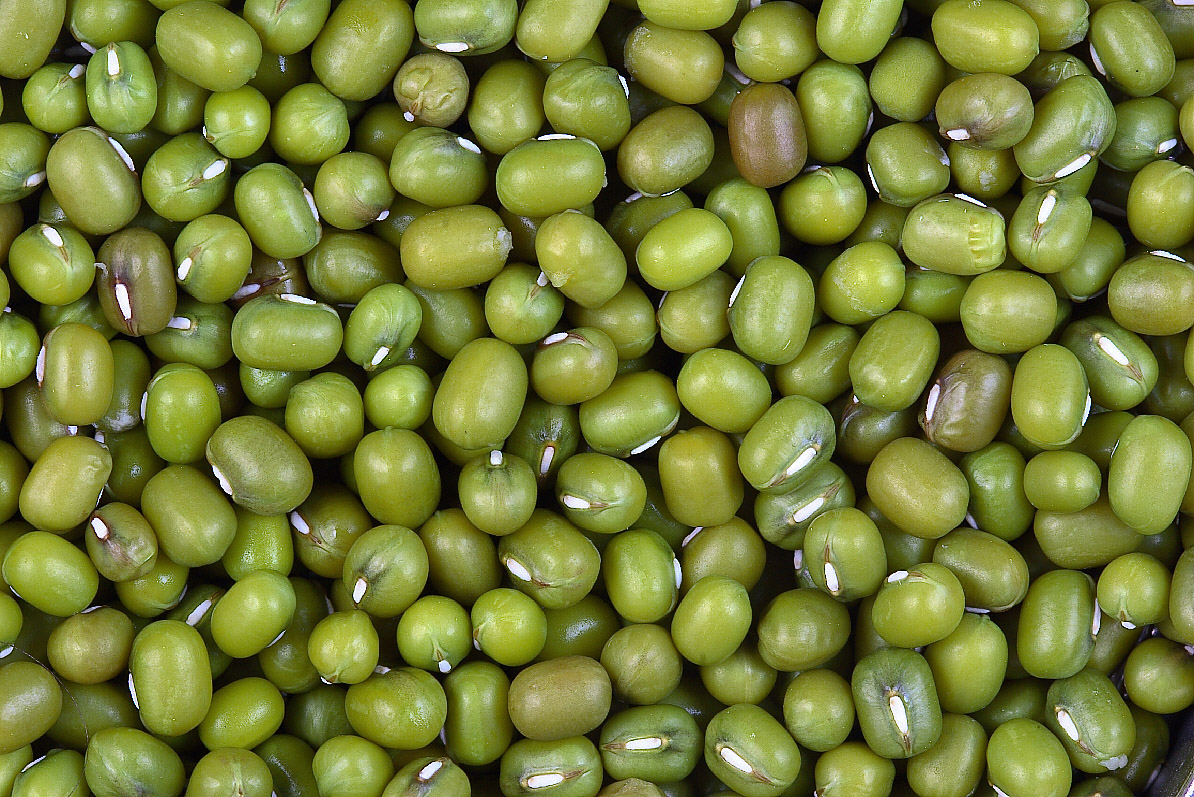
A mung bean plant is an erect or semi-erect annual herb reaching 15 – 130 cm long. It has trifoliate leaves that are ovate and entire. Mung bean bears greenish to yellow flowers about 1 cm long. It produces a bunch of slender, blackish, hairy pods about 10 – 15 cm long. The seeds are 4-6 mm in length.

Medicinal Uses:

* It prevents prickly heat, heatstroke and heat rash.
* Decoction of roots used for bone pains.
* Eaten as soup or congee can expel toxins.
* Decoction of seeds used for rheumatism and other related nervous system diseases.
* Boiled seeds used in poultices.
* The seeds are used for hemorrhoids and liver afflictions.
* Powdered beans used in treating burns, skin ulcers and effective in promoting suppuration.
* Seeds used in anorexia.
* Seeds used for acne, boils, sores and blackheads.

Banaba — Lagerstroemia speciosa Linn.– Queen’s Flower

photo link

Banaba is a deciduous tropical flowering tree that grows up to 20 meters in height. It has large green oblong leaves about 30 cm long. The plant sheds leaves that red or bright orange during the early months of the year. It bears racemes pink to lavender flowers from March to June. After flowering, it bears large clumps of brown bears nut-like fruits about 0.5 inches. Banaba plant is widely distributed in the Philippines, and is cultivated for its beautiful flowers. For medicnal purposes, the plant’s leaves, fruits, flowers and bark are used.

Medicinal Uses:

* Concoction of bark/roots helps ease diarrhea and other stomach ailments.
* Banaba tea effective in combating diabetes, kidney, bladder, dysuria and urinary problems.
* Concoction of leaves and flowers eases fevers. and as diuretic.
* Leaf concoction helps ease urination.
* The leaves, flowers and bark helps in controlling loose bowel movements.
* Tea of the leaves is used for weight loss and helps regulate blood pressure.

Bataw — Dolichos lablab Linn.– Hyacinth Bean

photo link

Hyacinth bean is a climbing or twining vine about 4 to 6 m long, with purple flowers and pods. Also, the leaflets are purplish green and triangular in shape about 3-6 in long. The flowers are arranged in loose clusters on long stems, while the pod are small, smooth, and flat 2-3 inches long containing 4-6 seeds that may be red, brown, or white.

Medicinal uses:

* The stem is effective in treating cholera. * Concoction of leaves used for colds, fever, cough, high blood pressure and skin diseases.
* Concoction of leaves eased gonorrhea.
* Poultice of leaves for headaches, dizziness, snake bites.
* Concoction leaves used for hepatitis, diarrhea, rheumatism, spasms, colic, and burn wounds.
* Juice of the leaves applied abscesses and tumor.
* Juice from pods mixed with salt effective against sore throat and ear inflammation.
Seeds used to stop nose bleeds.

Buntot ng Kabayo –Equisetum arvense — Horse Tail

photo link

A ferny perennial with jointed rootstocks. These horsetails have simple and erect stems reaching up to 80 cm tall, 3-5 cm in diameter branched. Bulbs or Rhizome appear like a string of beads.

Medicinal Uses:

* Decoction of stems used externally to stops bleeding and for wound healing.
* Effective in easing diarrhea, liver problems, heavy menstruation, infection of the urinary tract and prostate disorders.
* An excellent astringent in reducing hemorrhage.
* Decoction used hair rinse, sprains and skin diseases.

Bulak-manok — Ageratum conyzoides Linn.- Billy Goat weed

photo link

Billy goat weed is an erect, slender, common perennial tropical herbaceous weed growing up to 2.5 feet tall. The stalked, alternate, hairy and aromatic smelling leaves are about 4-11 cm long, and 1 to 5 cm wide. The stem is often red and has long white hairs, while the dark seeds have scales and often serrate below. The flowers are small with numerous flowering heads. For medicinal purposes leaves, young stems and flowering tops are used.

Medicinal Uses:

* Every part of the plant as a decoction is used for the treatment of fevers, colds, cough, and high blood pressure.
* Decoction of leaves used for eczema, furuncle and external wounds.
* Poultices for headaches.
* Juice from fresh parts used for treating otitis media.
* Also used to ease dizziness, dysentery, and hepatitis.
* Decoction of leaves used for headaches, burn wounds, colics, rheumatism.

Bagasua — Ipomoea pes-caprae (Linn.) Roth — Beach Morning Glory

photo link

A smooth, perennial creeping vine rooting at the nodes. The leaves are alternate, elliptical in shape with broad base can reach 4.5cm in length. Flowers are either angular or flattened, light purple, are up to 3-16 cm in diameter. The Stem or stalk is erect and carries 1-6 flowers that opens one at a time. Seeds are covered with hairs.

Medical Uses:

* Roots are eaten raw to ease stomach aches.
* Decoction of leaves used for rheumatism, bladder disease.
* Boiled leaves used externally for colics.
* Paste of leaves used for boils.
* Seeds alleviate cramps and stomach pains.
* Boiled tubers used to treat intestinal parasites

Buli — Corypha elata Roxb.– Buri Palm

photo link

Buri Palm is the largest of the Philippine palms. They flower only once in their life, producing plentiful rounds fruits and die after. Buri palm has erect and straight truck growing up to 1 meter in diameter and reaching up to 20 m tall. It has huge and fan-shaped leaves reaching 3 meters long. Also, Buri palm has pyramidal inflorescence grows up to 7 m high. The plant bears numerous greenish-white flowers about 5-6 mm in diameter. It has fleshy, round-shaped fruits about 2-2.5 cm in diameter.

Medicinal Uses:

* Decoction of young plant used for fever, colds and runny nose.
* Starch effective for treating bowel disorders.
* Juice made from roots eases diarrhea.
* Chewing fresh roots good for coughs.

Balbas-bakiro – Momordica cochinchinensis Lour.– Spiny Bitter Cucumber

photo link

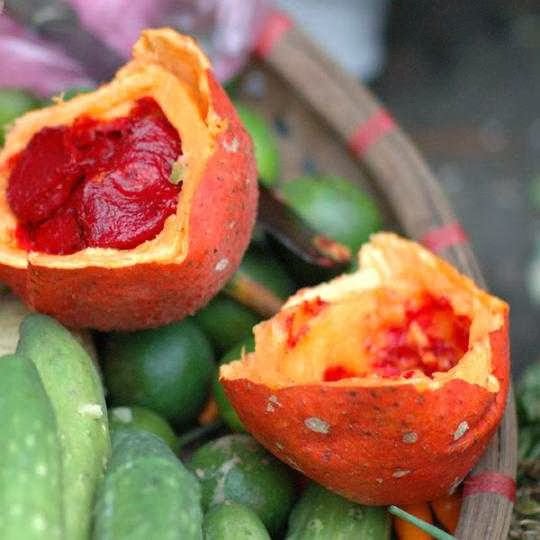
A climbing or trailing dioecious vine starting from a tuberous root, often reaching 15 meters long. Leaves are mostly egg-shaped about 8-128 cm long, divided into 3-lobed with pointed tip. The fruit is large, 8-12 cm in diameter, yellow turning red at maturity. Seeds are large, flattened, and contain an oil that is used as an illuminant. Medicinal Uses:

* Decoction or pulverized seeds used for coughs.
* As a substitute for soap, roots are effective against head lice.
* Plaster made from roots stimulates hair growth.
* Seeds and leaves are mild laxative.
* Seeds effective for ulcers, hemorrhoids, wounds, bruises, swelling of the neck, mammary abscesses.
* The seed membranes can help promote healthy vision.
* Also used for liver and spleen disorders.

Related Posts:

The Philippines Most Promoted Medicinal Plants

Philippine Medicinal Plants Part 2

Thursday, March 28, 2013

Philippine’s Medicinal Plants Part Two

Here is the next list of Philippine’s backyard plants that also have medicinal properties.

The Philippines is blessed with more than 500 medicinal plants, and below is another list of 10 medicinal plants approved by the Philippine Department of Health (DOH) as an alternative medicine in treating particular disorders.If you haven't read the previous list then here's the link: The Philippines 10 Most Promoted Medicinal Plants

Abukado (Persea americana)-Avocado

photo link

The tree may be erect and grows up to 10-15 meters high with alternately dark-green leathery leaves. The flowers are small greenish-yellow about 5 – 10 millimeters wide. The pear-shaped fruit with a large central seed, can grows up to 20 centimeters long, and weighs between 100 – 1,000 grams. Avocado typically grown from seeds, but may be propagated by grafting, marcotting and budding.

Avocado fruit is a good source of potassium, fiber, vitamins A, B,C and D. For medicinal purposes, the fruit, leaves and seeds are use.

Here are some medicinal uses of avocado:

* The leaves and the bark are used to treat coughs.

* The leaf decoction is good for treating sore throat, diarrhea, dysentery, and hemorrhage.

* The leaves are chewed as a cure for pyorrhea (gum inflammation with discharge of pus)

* The leaf juice has antibiotic activity.

* A warm moist preparation of leaves are applied on wounds.

* Applying heated leaves on the forehead ease nerve pain.

* The leaves and bark regulate menstruation.

* Decoction of powdered seeds effective for toothaches and used to treat osteoarthritis.

* Avocado tea used to treat worms.

* Ripe fruit flesh ease sunburned skin while pulverized seeds good for dandruff.

* Avocado oils good for treating infections, wounds and arthritis.

Atsuete (Bixa orellana Linn) Lipstick plant/ Annatto

photo link

Achuete is a shrub that grows to 4-6 meters. The plant with shiny heart-shaped leaves, bears white or pinkish and bright red spiny fruits containing small red seeds. It is best known as the source of the natural pigment annatto, produced from the fruit.

Achuete is cultivated throughout the Philippines. Aside from its culinary uses, achuete also has many medicinal uses where the leaves, barks and seeds are utilized. Here are some:

* For treating burns, fresh leaves boiled in water is effective. Let the water cool down and then soak the affected areas for 10 minutes once a day.

* Seeds’ pulp ease blistering and scarring.

* Moistened fresh seeds are effective in the treatment of red rashes.

* A mixture of the leaves effective as purgative.

* Poultice of leaves used for treating gonorrhea.

* Decoction of leaves ease vomiting and effective for nausea.

* Decoction of leaves regulate menstruation.

* Leaves are antidote for snake bites.

* A mixture of warm coconut oil and is applied on the forehead for headaches.

Atis (Anona squamosa Linn.) Sugar apple

photo link

Sugar-apple (also called atis in Tagalog) is a semi-evergreen shrub that grows up 3 to 5 meters high. The leaves are alternate, oblong, 5 to 17 cm long and about 2 to 5 cm wide. The flowers are light green to yellow about 2.5 cm long with three large petals. The fruit is round, large and somewhat heart-shaped, 6–10 cm in diameter and weighs between 100–230 g. When ripe, the fruit is sweet, white to light yellow, with delicious and juicy flesh.

The plant is grown throughout the Philippine. For medical purposes, the leaves, fruits and seeds are used. Here are some of sugar apple’s medicinal uses:

* Leaves are effective in the treatment of skin itches.

* Decoction of salted leaves aid to speed up suppuration.

* Bark decoction is effective in the treatment of diarrhea.

* Leaves or roots offer purgative action.

* Leaf decoction alleviate pain if used for rheumatic baths.

* Crushed fresh leaves applied over nose is effective for treating fainting and hysteria.

* Juice extracted from unripe fruit is good for insect bites.

* Decoction of leaves used in treating dysentery.

* Decoction of the leaves used to treat colds and ease digestive problems

Apatot (Morinda citrifolia) Indian Mulberry

photo link

Indian Mulberry is a small tree or an evergreen shrub growing to 5-10 meters high. The leaves are simple, elliptic and oppositely arranged about 15-25 cm long. The flowers are white, scented, tubular about 2-3 cm long. It has yellowish fruit about 2-2.5 cm diameter that has a pungent odor when ripening. Apatot are found along or near seashores, throughout the Philippines. For medicinal uses roots, bark, leaves are utilized.

Medicinal Uses:

* Flowers, fruits, leaves and bark are used to treat eye skin wounds, gums and eyes problems.

* Fresh leaves are used to ease ulcers.

* Heated leaves applied to the chest are best for fever, coughs, stomach pains, constipation, nausea.

* Decoction of charred leaves used to treat diarrhea.

* Fruit pulp used to make a shampoo.

* Decoction of leaves are good tonic drink.

* Juice from leaves used to treat arthritis.

* Juice of over-ripe fruit or leaves are known to combat diabetes.

* Fruit juice effective as a gargle for sore throats.

* Juices of over-ripe fruits used to ease urinary problems.

* The bark or leaves, used to treat muscle and joint pain

Aratiles (Muntingia calabura Linn) Jamaican cherry

photo link

Aratiles is a small tree that grows 7-12 meters with spreading branches. It has hairy, sticky, jagged leaves about 8 to 12 cm. long and 1 to 6.5 cm. wide. The flowers are white, small and slightly scented about 2 cm in diameter. The berry fruit is light red, edible, sweet and fleshy about 1.5 cm diameter. The tree is widely distributed in the Philippines. For medicinal purposes, the bark, leaves and flowers are used.

Medicinal uses:

* It is used for treatment of headaches and colds.

* Decoction of flowers used to relieve abdominal cramps.

* Decoction of flowers used for treatment of spasms and a good antiseptic.

Anonas (Anona reticulata Linn) Custard apple

photo link

The Custard Apple tree is a small, deciduous, and erect tree that reaches up to 10 meters tall. The leaves are shiny, alternate and oblong that grows up to 20 cm. Flowers are greenish-yellowish in color, fragrant and about 2 to 2.5 cm long. The fruit about 8-16 cm long is brownish-yellow and heart-shaped. All parts of this plant have medicinal values such as:

* The unripe fruit good for relieving diarrhea and dysentery

* Warm leaves is used to treat indigestion.

* The tree bark is used for treating skin diseases.

* The seed bark is astringent.

* Dried and powdered unripe fruit used for diarrhea and dysentery.

* The roots fights against epilepsy.

* Crushed leaves used as poultice is good for ulcers, boils and abscesses.

* Decoction of root bark are placed around the gums to ease toothache.

* The fruit is useful in treating anemia.

Alugbati (Basella rubra Linn) Malabar Nightshade

photo link

Alugbati is a succulent, fast-growing, herbaceous vine that grows up to 10 m in length. Its heart-shaped leaves is soft, thick, juicy, tasty grows 5 to 12 cm long. Alugbati grows in settled and cultivated areas, in hedges. Aside from its nutritional value such as: a good source of vitamins A, B, and C, excellent source of calcium and iron, Alugbati also has some medicinal uses.

* Roots are used as rubefacient (reddens the skin).

* Pulped leaves poultice used to ease swelling.

* Sap used to diminish acne eruptions inflammation.

* Decoction of leaves alleviate digestive discomfort due to loose bowel movement.

* Pulped leaves used for treatment of boils to accelerate suppuration.

Ayapana (Eupatorium triplinerve Vahl) White snakeroot

photo link

Ayapana is a small, erect, perennial herb that reaches 30 to 60 cm. in height.Leaves are smooth, barely elliptic, opposite, distantly toothed that grows 20 to 30 cm high. The 6-13 mm flowering heads bear as much as 20 pinkish flowers about 6 to 7 millimeters long. Ayapana is widely distributed in the Philippines. When used for medicinal purposes, leaves, flowers, and the whole plant itself are utilized.

* Used for treating digestive problems such as stomachaches, gastric ulcers and bowel disorders.

* Effective for relieving colds, coughs, sore throat, bronchitis and other lung problems.

* Used for cuts, scrapes and wounds.

Adelfa (Nerium indicum Mill.) South Sea Rose

photo link

Adelfa is a small, smooth, evergreen trees that grows up to 4 meters high. The leaves are simple, opposite with numerous horizontal nerves, about 10-15 cm long. 10-15 cm long. The fruit is cylindrical in shape, paired with deep stripy patterns about 15 to 20 centimeters long. The fruit bears many seeds that are generally flat with a clump of fine, shining, white, silky hairs. Adelfa is widespread in the Philippines. For medicinal uses, the bark and leaves are used.

* Decoction of leaves use as poultice effective against snake bites.

* Paste made from roots used externally for hemorrhoids, chancres and ulcer.

* Roots and bark applied externally used for eczema, scabies and other skin diseases.

* The root is effective in stopping inflammation.

* The leaves and flowers used for cough, malaria, dysmenorrheal and internally used for abortion.

* The whole plant is believed to have anti-cancer properties.

Amarillo (Tagetes erecta L.) Marigold

photo link

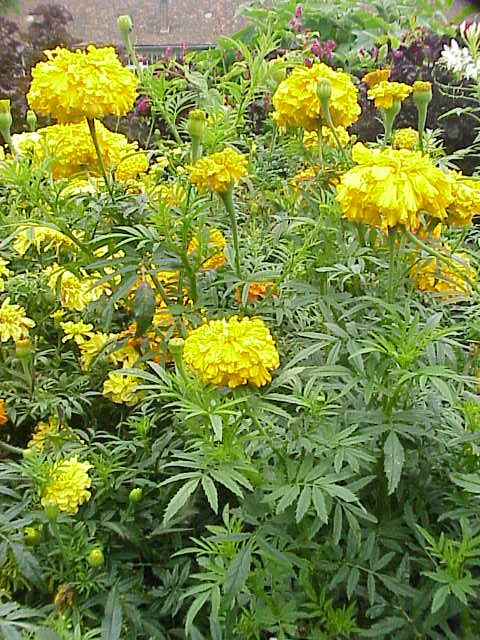
Amarillo is an erect, rough, erect, smooth- branched, smelling annual plant growing to about a meter in height. Leaves are deeply pinnatifid ( leaves that have central axis with parts branching off it) about 4 to 11 cm long. The fruit does not open (akene), linear about 6 to 7 mm long.

Amarillo tree is ornamentally cultivated throughout most of the Philippines. The flower is used for medicinal purposes. Below are some of its medicinal uses:

* Decoction of flowers applied externally is effective against colds, eczema, mumps, rheumatism and sore eyes.

* It is used to ease irregular menstruation, abdominal pains connected with menstrual period.

* It is used to cure anemia.

* Alleviates rheumatic muscular and bone pain.

* Taken internally, used for treating constipation, indigestion and dysentery.

Article link:

Monday, November 26, 2012

The Philippines 10 Most Promoted Medicinal Plants

10 medicinal plants approved by the Philippine Department of Health (DOH) as an alternative medicine in treating particular disorders

The Philippines is blessed with more than 500 medicinal plants, and below is a list of 10 medicinal plants approved by the Philippine Department of Health (DOH) as an alternative medicine in treating particular disorders.

Ampalaya:(Bitter Gourd) – Momordica charantia

photo link

Ampalaya is a herbaceous, climbing vine that has heart-shaped leaves and grows to 5 meters. In the Philippines, ampalaya is grown year long for its bitter edible fruit. Each plant bears separate yellow male and female flowers. The fleshy green fruit has an oblong shape.

Medicinal Uses (parts use: leaves, roots, fruits)

Leaves or root decoction can be use to ease hemorrhoids.

Juice made from leaves is use for cough, to heal wounds and as a purgative and to drive out intestinal parasites.

Juice from fruit is effective for dysentery and chronic colitis.

A mixture of seeds and roots is helpful in treating urethral discharges.

Pounded leaves used for scalds.

Concoction of leaves relieved fevers.

It is also used for jaundice, eczema, abdominal pain, pneumonia, rheumatism, and psoriasis.

Recent studies have suggested that ampalaya is highly recommended for the treatment of diabetes. It contains a plant insulin responsible for its blood sugar lowering effect.

Akapulko: (Ringworm Bush) – Cassia alata

photo link

Akapulko or Acapulco in English is an erect, shrubby legume found throughout the Philippines. It grows up to 6 feet tall, with dark green compound leaves. It has yellow-orange flowers that produce on average 50-60 small, triangular seeds. The parts use are leaves, flowers and seeds.

Medicinal Uses (parts use: leaves, flowers and seeds)

The seeds are used in expelling intestinal parasites.

Decoction of leaves and flowers eases cough.

Crushed leaves and juice extract are used to treat fungal infections such as; ringworm, athlete‘s foot, scabies, eczema, and herpes.

Pounded leaves are used for insect bites, rheumatism and reducing swelling of joints due to injuries.

Mixture of leaves and flowers used as mouthwash in the treatment of stomatitis.

The leaves stain is used as purgative.

The juice of the leaves is used for the treatment of fetid discharges.

Decoction of leaves are used to treat bronchitis and asthma.

Bawang: (GARLIC) - Allium sativum

photo link

A low herb that grows to about 30-60 cm high. Garlic leaves are linear and flat and the bulbs are about 2-4 in. that are widely ovoid containing several angular and truncated tubers. In the Philippines,iIt is commercially grown in the provinces of Ilocos Norte, Batangas, Mindoro, Nueva Ecija and Cotabato.

Medicinal Uses:

Crushing a lobe and massaging it to both temples can relieve headache

Crushing a lobe of garlic and directly rubbing to affected areas is used to treat insect bites.

Mixture of leaves and bulbs boiled is used for the treatment of fever.

Decoction of leaves and bulbs is also used for tonsillitis.

It is used for treating gastrointestinal spasms and digestive problems.

Juice from crushed garlic is good for cough, sore throat, colds, asthma and bronchitis.

Also used in the treatment of athlete’s foot.

Bayabas: (GUAVA) - Psidium guajava

photo link

The guava is a Perennial tree or shrub with oval to oblong leaves about 7.6 cm (3 inches) in length. At maturity, the tree will reach up to 25 feet high. It bears white flowers that developed into ordinary yellow fruits on ripening. Found throughout the Philippines and is a common backyard plant. The fruits are edible and is very high in Vitamin C. for its medicinal applications, the leaves are used.

Medicinal Uses:

It has antiseptic, antispasmodic, and astringent properties.

Fresh leaves are used for treating wounds and toothache.

Decoction of fresh leaves is used as cleaning agent for wound to ease healing and to prevent infection

Boiled fresh leaves is used for aromatic baths.

Decoction of leaves is also used for diarrhea.

Chewing fresh leaves is used as mouthwash to ease gum swelling.

Decoction of leaves is also used for skin ulcers.

Placing densely roll leaves into the nostril cavity can stop nosebleeds.

It is also used as vaginal wash (after childbirth) or douche.

Lagundi: (Five-leaved chaste tree) - Vitex negundo

photo link

Medicinal Uses:(parts use:leaves, bark, roots and seeds)

Decoction of leaves are used for headache, toothache, fever, cough and asthma.

Boiling leaves in coconut oil stop fungal infections on scalp.

Ash of fresh leaves are used for swelled rheumatic joints.

Decoction of leaves are used to ease amenorrhea, menstrual difficulties, menorrhagia, and Premenstrual Syndrome.

Lukewarm decoction of leaves are used for sponge bathing.

Mixture of leaves are used as wash in treating wounds and ulcers.

Decoction of leaves taken as a diuretic.

Niyog-niyogan: (Chinese honeysuckle) - Quisqualis indica

photo link

Niog-niogan is a large climbing shrub that grow to about 2.5-8 meters. The leaves are egg-shaped and opposite with a pointed tip and a rounded base. The flowers’s color varies from white to purple orange and are aromatic and tubular. The fruit grows to about 30-35 mm long and their color varies from white to pink to red. The 30 to 35 mm long fruit is oval-shape and has five distinguishable wings.

Medicinal Uses:

The seeds (dried nuts) and leaves are used for traditional medicine.

Dried seeds are used for deforming.

Decoctions of the root can be used as antihelmintic.

Roasted seeds are used to ease diarrhea and fever.

Fruit decoction is also used for gargling and to fight nephritis.

The roots can be used to ease rheumatism.

Decoctions of seeds and fruits are used as pectoral to combat ascaris.

Juice out of leaves are used for boils, ulcers, and headache cause by fever.

Pounded leaves are used externally for skin diseases.

Decoction of boiled leaves used to ease difficulty in urinating.

Pansit-pansitan: (SHINY BUSH) - Peperomia pellucida

photo link

It is a small herb that grows may reach 40 cm high ad can be found in damp areas such as: yards nooks, walls and even roofs. Leaves are shiny light green, heart-shaped , and alternate. Stems are erect, juicy and glabrous with tiny flowers on a spike. The fruits are also very small; round to oblong, green but turns to black when ripe.

Medical Uses: (parts use: leaves and stems)

Fresh juice out of stem and leaves combats eye inflammation.

Concoction of leaves are used as treatment for headache, fever, common colds, sore throat, cough, coughing, and diarrhea.

Also used to fight against prostate problems.

Mixture and decoction of leaves and stems ease gout and arthritis.

Concoction of stems and leaves is good against high blood pressure.

Concoction of leaves are used for abscesses, conjunctivitis, rheumatic pains, and gout.

Externally, as a facial wash for skin problems.

Pounded whole plant used as warm poultice for wounds, boils, and pimples.

Sambong: (Blumea camphora) – Blumea balsamifera

photo link

Sambong is a tall, erect, half wood, strongly aromatic herb that thrives in open fields, grasslands and waste areas. The shrub can grow up to 4 meters tall grows up to tall. Leaves are elongated with jagged edge and bears yellow flowers.

Medicinal uses: (parts use leaves)

Leaves is an effective poultice for abscesses.

Decoction leaves is used to ease fevers and cystitis.

Concoction of leaves is used for rheumatic pains.

Fresh juice of leaves used for wounds and cuts.

Poultice of leaves used for headaches and stomach pains.

Tea is used for colds and as an expectorant.

Concoction of leaves is used for treating dysentery, sore throat

Tsaang Gubat: (Fukien tea tree) - Ehretia microphylla Lam

photo link

Tsaang Gubat is a shrub that grows up to 5 meters. Found throughout the Philippines in secondary forests at low and medium altitudes Leaves in clusters, simple, rough, alternate, jagged towards the tip, slowly narrowing towards base. Tsaang gubat bears white flowers and a fleshy, yellow-orange when ripe fruits.

Medicinal Uses: (part use; leaves)

Taken as tea, it is effective for stomach ache, diarrhea, and dysentery.

Decoction has also been used as a dental mouthwash.

Leaves concoction is an antidote for plant-based poisoning;

Leaves are also used to stop bleeding from snakebites. ; as body cleanser after childbirth.

Decoction of leaves is used as disinfectant wash after childbirth.

Yerba Buena: (PEPPER MINT) - Clinopodium douglasii

photo link

Yerba Buena is a strongly aromatic herb of the mint family. This perennial plant can reach up to 1 meter long with ascending terminal branches. growth ranges from 0.6 meters to 1 meter. It has elliptic to oblong-ovate, elongated leaves 1.5 to 2 cm long and bears small, hairy whitish, light blue or purplish flowers. Yerba Buena plants are found in high elevated areas.

Medical Uses: (parts use: leaves and stem)

Decoction of leaves is used for headaches, fever, toothaches, migraine and joint pains.

Leaves soak in a glass of water is an effective mouthwash.

Decoction of leaves is also used for treating indigestion, dysmenorrhea, stomach aches, diuresis, and relieves internal gas.

Pounded or crushed leaves is effective for insect bites.

For dizziness: Crushed fresh plants or leaves are sniffed.

It is good for the health if taken as a tea.