


Blueberry

Found throughout North America, blueberries grow abundantly in mountain regions and in forested areas. These flowering plants varies in size from 10 cm tall to 4 m tall. In commercial production, two species stand out namely: “lowbush blueberries” (smaller species) and the “highbush blueberries”(larger species).
Aside from eating the fruit fresh, blueberries are also use in making commercially processed products such as; jams, pies, juice, puree, dried berries and cereals.
Health Benefits of Blueberry:
* It is antioxidant.
* It helps in slowing down aging and is used in treating other age-related diseases.
* It helps prevent urinary tract infections.
* It helps prevent cardiovascular diseases.
* It relieves diarrhea.
* It prevents Ovarian Cancer and Colon Cancer
* It promotes Gastrointestinal Health.
* It may also prevents breast cancer in women.
Indian Gooseberry

The The Amalaki (Indian Gooseberry) is a deciduous tree varying in size from 8 to 18 m in height. The tree has a gray bark, flowers having greenish yellow color and the fruit is pale yellow in color. The fruit, leaves, root, seed, flowers, and bark are used in various herbal preparations. The fruit containing high tannin content, is commonly used in making shampoos, inks and hair oil.
Health Benefits of Indian Gooseberry:
* It is an excellent source of Vitamin C
* It is antioxidant.
* It is use in treating eye problems including cataracts and eye inflammations.
* It relieves dandruff and controls premature graying of hair.
* It helps the urinary system
* It increases body immunity.
* It prevents heart and nervous disorders.
* It strengthens the lungs.
* It strengthens the eyes.
* It aids in nourishing the brain and enhancing mental functioning.
Sea-buckthorn
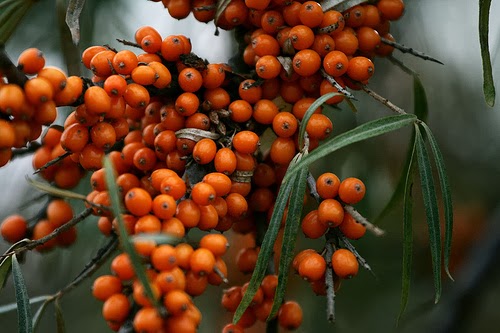
A deciduous plants that reaches 2 to 5 meter in height, Sea-buckthorn are found growing abundantly in countries like: China, India, Nepal, Mongolia, Pakistan France, Great Britain, Germany, Sweden, Norway Finland and Poland. The female plants bear juicy orange berries that is rich in oils. The berries are used to make juice pies, jams, lotions and liquors. Tea and other pharmaceuticals products are produced from the bark and leaves of this plant. Also, sea buckthorn has medical benefits, and is primarily used for treating skin-related diseases.
Other medicinal properties of Sea buckthorn oil includes:
* It is rich in vitamin C, vitamin E and falconoid.
* It has a strong antioxidant activity.
* It promotes tissue regenerations.
* It strengthens the immune system
* It is use in in treating burns and healing wounds.
* It is use in the treatment of gastric ulcers,
* It increases cardiovascular health.
* It protects liver functions.
* It is analgesic.
* It is use to treat foot problems, radiation damage, cervititis and vaginal mucositis.
* It supports prostate health and hormone balance.
Lingonberry

Lingonberry, also called cowberry, fox berry is native to North America. A perennial flowering plant reaching 4 to 16 inches high, lingonberries bear fruits twice a year, once in early spring and once in summer. The small red berries that has a tart taste, are primarily use in making juice, jellies, pie fillings, sauce, candies, ice cream, syrups, jams wines, and liquor. Lingonberries are rich in helpful nutrients that includes Vitamin C, organic acids, beta carotene, vitamin B, calcium, potassium and phosphorus.
Lingonberry has a long history of medicinal uses such as:
It prevents urinary-tract infections.
It lowers cholesterol levels preventing heart problems.
It relieves indigestion and heartburn.
It prevents bladder and intestinal disorders.
It is use in treating articular pains, rheumatism and tonsillitis.
The leaves are astringent and antiseptic.
It can also reduce symptoms of sunstroke.
Blackberry

The blackberry is a common perennial plant which is found throughout the Northern Hemisphere particularly in countries like, Britain, Italy, Spain, Turkey and the U.S.A. There are more than a hundred species of blackberry found in woodland, meadows, waste ground etc. Blackberries are popular for their sweet, edible fruits. The fruits are made into jellies, jams, preserves, syrups, other desserts, wine and vinegar. Besides these commercial uses, black berries too have many medicinal uses which are listed below:
Blackberry Herbal Use and Medicinal Properties:
The leaves contain high level of vitamin C that help in promoting a healthy immune system and promotes tissue repair.
The extracts of the bark, leaves and seeds are helpful in treating diabetes.
The leaves are effective for the treatment of diarrhea, dyspepsia. dysentery, hemorrhoids, cystitis, mild sore throat, etc
The bark and the leaves are strongly astringent, cleansing agent, diuretic, tonic and useful in healing wounds.
Chewing fresh leaves can help in strengthening teeth, inflamed gums and cancer sores.
Juice made from berries is use as lotion in the treatment of ringworm.
Chewing fresh blackberry leaves can help cancer sores and inflamed gums.
Blackberry medicinal tea is use in treating Colds & Flu, skin rashes and rheumatism.
Raspberries

Raspberry is a biennial shrub that is native and grows wild in Europe, North America and Asia. The plant has perennial roots and flowers in May and June. It is a popular fruit used in the production of jam, syrups, pies, fruit salads and preserves. Red raspberries also contain many health-promoting properties.
Medicinal Action and Uses
It is used against fever and flu.
It is useful in treating diarrhea.
It is a good medicine to cure wounds and upper respiratory disorders.
It is antioxidants and has excellent anti-inflammatory activity.
It lessens labor pains and helps to ease childbirth.
Juniper Berry

The Juniper, is a small evergreen shrub growing to 4 -6 ft. tall, tall that is found abundantly throughout the Northern Hemisphere. A juniper berry is not a true berry but a cone with uncommonly plump and merged scales, which give it a berry-like appearance. The berries size vary from four to twelve millimetres in diameter; though some species bear larger berries. The fruits are harvested in early autumn for culinary and medicinal use. Juniper berries are used for the production of the unique flavoring agent of gin and dry martini.
Medical Uses and Benefits of Juniper Berry
It is use to treat stomach ailments, including stomach ulcers, abnormal bowel syndrome, and colitis
It is use to treat kidney problems.
It also aid in treating colds/flu, asthma, rheumatism, arthritis
It is a natural diuretic.
It has antiseptic properties.
It is anti-inflammatory.
It is use to treat urinary tract infections.
It has natural insulin properties and beneficial in cases of diabetes.
Wolfberry (Goji Berry)

Wolfberry species are deciduous, rangy perennial plants native to Tibet, China and the Himalayan mountains. The plant grows up to 10-12 ft and bears raisin-sized berries. The wolfberry is also being called the world’s most powerful anti-aging food. The berries contain high level of antioxidants and protein. It is used for its medical properties.
Wolfberry’s Medicinal Properties and Uses:
It is antibacterial.
It also lowers cholesterol.
It is use in treating colds, fever or flu.
It is use in treating cancer.
It is use in treating UTI (urinary track infection)
It is use in treating eye problems.
It is purgative.
It is use in the treatment of some skin problems including skin allergies, skin rushes and psoriasis.
It is use to treat prostate enlargement.
It has also been used in the treatment of cervical cancer.
Acai Berry

An açaí palm, is one of eight species of palm tree in the genus Euterpe that are native to Central and South America. The tree is now primarily cultivated for its fruit grows mainly in floodplains and swamps. These trees are tall, slender palms growing to 49-99 feet. The fruit, similar in appearance and size to a grape is about 1 inch (25 mm) in diameter.
Medicinal Properties of Acai Berry:
It is use to treat diarrhea
Crushed fruit seeds are used to cure fevers
It helps to regulate the body sugar levels and fight against leukemia.
It aids in relieving toxin in our body.
It is use in the treatment of wounds.
It has high anti-inflammatory activity.
It lowers cholesterol and removes blood clots.
It aids in digestion.
It fight against leukemia.
Chokeberries

The chokeberries (Aronia) are deciduous shrubs, commonly found in wet woods and swamps. In eastern North America, there are two well-known species, named after their fruit color, red chokeberry and black chokeberry. The plant grows to 2-4 m tall. The fruit is a small pome, bitter and with a very astringent flavor. Chokeberries are considered to be the healthiest fruit in the world and are very rich in anthocyanins, a phenolic phytochemicals. It has also high levels of quinic acid that prevents urinary infection. Juice extracted from the fruit is high in vitamin C and antioxidants. The berries can also be used to make wine, jam, candies, pie, yogurt and flavored milk.
Some Benefits of Chokeberries Includes:
Is a great source of antioxidants
Fights bacteria and viruses, such as colds and the flu
Fights against Cardiovascular Ailments
Prevents Urinary Tract Infections
Aids digestion
Has anti-inflammatory properties
Strengthens memory


