Sliders

Showing posts with label avocado. Show all posts

Monday, July 20, 2015

10 Fruits That Help Lower Blood Pressure Levels

The high potassium in some fruits can help lower blood pressure and reduce the risk of heart disease. Keep your blood pressure under control and keep your potassium levels in check by reaching for any of these fruits.

1. Bananas

photo link

Why do we see tennis players eat bananas during a match? Bananas are best-known for their potassium content which helps replenish lost fluids from sweating so much during a game. It also adds energy and helps prevent cramps.

2. Avocados

photo link

Considered as one of the most nutritious fruits, avocados are excellent sources of fiber, vitamin K, and folate, and very good sources of potassium, pantothenic acid, and vitamins C and E. One cup of cubed avocados can provide the body with a good amount of the B vitamins, as well as copper, magnesium and manganese.

3. Guavas

photo link

The guava, considered as one of the superfoods, is the fruit with the highest vitamin C content. In addition to being an excellent source of fiber and vitamin A, it is also a very good source of vitamin B6, potassium, copper and manganese.

4. Breadfruit

photo link

The breadfruit is another fruit which needs to be cooked before it is consumed. Every 100 grams can supply the body with half of the DV of vitamin C. It is also loaded with 20% of the DV of fiber and is a very good source of potassium, magnesium and thiamine.

5. Tamarinds

photo link

The tamarind is a tart fruit which is typically used as a spice and souring agent. It is an excellent source of thiamine, magnesium, fiber, and potassium. It is also rich in iron, phosphorus and niacin and one of the few fruits packed with calcium.

6. Durian

photo link

The king of fruits boasts of its high vitamin C content. It is also rich in vitamins B1 and B6, fiber, folate, magnesium, and manganese, and is blushing with 436 mg of potassium for every 1 cup of chopped or diced fruit.

7. Plantains

photo link

Plantains are fruits which can be mistaken for bananas. They are classified as fruits but are considered as vegetables as they need to be cooked before they can be eaten. Plantains are very high in vitamins A and C. They are also packed with vitamin B6, magnesium, and fiber and almost a quarter of the daily value of potassium.

8. Custard-apple

photo link

Custard-apple, also known as bullock’s heart contains almost the same amount of potassium as bananas. It can also provide the body with an excellent supply of vitamins C and B6, and fiber.

9. Kiwifruit

photo link

The kiwifruit is an excellent source of vitamins C and K and fiber, a very good source of folate, potassium and copper and a good source of the B vitamins and other important nutrients. Like the tamarind, it is one of the few fruits which contain the bone-friendly nutrient—calcium.

10. Purple Passion Fruit

photo link

Granadilla, also known as purple passion fruit is a Brazil native. You’ll get half of the daily value of vitamin C and fiber and a quarter of the DV of vitamin A for every 100 grams of this subtropical fruit. It can also contribute about 348 mg of potassium.

Sunday, May 11, 2014

Affordable and Natural Remedies for Hair Problem

What do raw egg, honey, yogurt, sour cream, lemon juice, avocado and baking soda have in common?

They are all affordable, natural remedies for hair problems!

photo link

For all hair types

Raw egg is considered the best natural remedy that suit well with all hair types. The yolk, loaded with proteins and fats is a good hair moisturizer. The white, laden with bacteria-eating enzymes, helps in eliminating unwanted oils.

Application:

Use the whole egg to condition normal hair; egg yolks only to deal with dry, brittle hair; egg whites only in treating oily hair. Note: Whites-only treatment can be applied twice a month, while whole egg and yolks-only treatments should be done only once a month;

Procedure:

Use 1/2 cup (or more if the need arises) of whichever egg mixture that fits your hair type and apply to clean, wet hair. Let mixture sit for 20 minutes, then rinse using cool water and shampoo hair.

For dull hair

Regular use of some styling products can harm or damage your hair leaving it dulls shine. A good affordable and natural remedy that can restore hair natural shine are plain Yogurt and Sour cream. These dairy products contain lactic acid that removes away dirt and milk which is a natural moisturizing agent.

Procedure:

Prepare 1/2 cup plain yogurt or sour cream; massage into clean, damp hair and leave on for 20 minutes. Rinse hair twice – first with warm water, then by cool water. Finish by shampooing hair. Do treatment twice a month.

For itchy scalp

Use an Olive oil and lemon juice concoction to fight dandruff. Lemon juice is rich in acid that helps free your scalp of stubborn dandruff, while the olive oil moisturizes the skin on your head.

Procedure:

Massage a concoction of two tablespoons olive oil, two tablespoons fresh lemon juice, and two tablespoons water, into clean, damp scalp.

Leave on for 20 minutes, then rinse and shampoo hair. Apply treatment twice a month or every other week.

For limp hair

An odd but affordable remedy to add body to hair is Beer! Hard to believe , but beer contains a sizeable amount of yeast that do wonder to plump tired tresses.

Procedure:

In a container, mix 1 raw egg, 1/2 cup flat beer, and 1 teaspoon canola oil. Let the mixture sit for a few hours to eat up carbonation. Massage to damp hair, leave on for 15 minutes, then rinse with cool water. You can apply treatment every other week.

For dry or sun-damaged hair

Damaged hair because of sun overexposure – Cheers! There’s plenty of Honey at the grocery. your trusty flat iron — nature’s sweetener can help. Honey is an absorbent substance (humectant), meaning it helps retain moisture.

Procedure:

Prepare 1/2 cup honey and massage into clean, damp hair. Leave on for 20 minutes, afterwards rinse with warm water. Treatment can be applied once a month.

For oily or greasy hair

An affordable way of treating this hair problem is the use of Cornstarch!

Procedure:

Pour onto an empty salt or pepper shaker 1 tablespoon of cornstarch. Then, sprinkle onto dry hair and scalp until the whole stuff is done. Rest for about 15 minutes, then use a paddle hairbrush to totally brush it out. You can do this procedure every other day.

For frizzy hair

A perfect choice to the job is by using Avocado. It is rich in protein helpful in maintaining hair smoothness and Its oil is a natural moisturizer.

Procedure:

Massage a mashed up regular-sized avocado into clean, damp hair. Leave on for 15 minutes, then rinse with water. Treatment can be applied every two weeks.

For residue-ridden hair

Leave the dirty job of breaking anything acidic to Super Baking Soda.

Procedure:

Make a thick paste using a mixture of 1 to 2 tablespoons baking soda with small amounts of water. Then, massage paste into damp hair and leave on for 15 minutes. Rinse with water, then shampoo hair. You can apply this treatment can be every two weeks.

These are all affordable and natural remedies for hair problems, you can do at home. However, if you prefer going to beauty saloons and beauty experts for treatment – that is your choice.

Sunday, April 27, 2014

Five Bad Foods That are Good for You

What do these five food have in common? Over the years, they are treated as bad foods. However, recent studies and researches suggest that their not really that bad — only if eaten or consumed in moderation. Read on to know them.

Here is a set of five foods that once were treated as bad or unhealthy foods. Thanks to modern studies, these foods have claimed their place in the healthy food list. So go take a bite!

Chocolates

photo link

Everyone loves chocolate, but what makes chocolate so irresistible? One thing is sure, chocolate’s charisma lies in its tempting taste. But it is unfortunate that all you hear about chocolate is its bad reputation – from rotting teeth to acne. Good news! Chocolate isn’t as bad for you as once believed; studies have shown that it has some health benefits, too.

Recent researches have revealed that chocolate is rich in flavonoids. What are flavonoids? These are natural compounds found in fruit and vegetables. They act as powerful antioxidants in your body, to fight off toxins and help your body’s cells to fight damage. Also, flavonoids also help check bad cholesterol – thus decreasing the risk of heart disease, high blood pressure and stroke. Recent studies indicate that eating moderate amount of dark chocolate is beneficial for people with diabetes. Furthermore, chocolate is a good source of potassium, magnesium, and several vitamins – including B1, B2, D, and E.

Knowing the above mentioned health benefits of chocolate, does it implies that you eat more chocolate products? Nope, overindulgence can lead to weight gain, which may result to heart problems and strokes. Moderation is always the key – consumed small portions of chocolates (about six grams of chocolate per day) and don’t forget to eat other flavonoid-rich foods like red wine, green tea, apples and cranberries.

Eggs

photo link

Is eating eggs unhealthy? Pity the poor egg; for years now, the dietary naysayers put eggs the villain of the breakfast world. These people are dead-scared about the high cholesterol content (found in the egg yolk) that can put you at risk of heart attacks. Today, continuous researches and studies have rebutted this misguided belief and medical findings have shown that eating eggs is healthy. New study indicates that people who eat eggs every day lower their risk of heart disease, stroke and blood clots. According to this study, there is no noteworthy connection between egg consumption and heart disease.

Eggs are loaded with high-quality protein and all 9 essential amino acids. They are good source of lutein and zeaxanthin that are beneficial for the eyes. Furthermore, eggs contain choline that helps manage the brain, nervous system, and cardiovascular system. Yes, one egg a day is acceptable, but people with heart diseases and diabetes should go for a small or medium egg.

Avocados

photo link

Avocado shakes this summer… I simply love that! However, some tend to cross-out this green fruit on their summer fruits list. Why, because of the misguided belief that it has high fat content. But avocado has made a dramatic comeback; thanks for the numerous studies and researches done proving that this delicious fruit has tremendous health benefits!

While it is a fact that avocado is indeed high in fat — nutritionists point out that avocados contain a monounsaturated fat (oleic acid) as well as a natural substance (beta-sitosterol), which help regulate blood cholesterol levels. Avocados’ high amount of folate are also protective against strokes. Thus, avocado is a highly recommended medicinal fruit for cholesterol-related heart diseases. Avocados are also rich in carotenoid lutein that help prevent cataracts and other age-related eye diseases.

Other studies reveal that avocados have anti-cancer benefits, helpful in preventing mouth cancer, breast cancer, skin cancer, and prostate cancer. If you believe avocado is a healthy fruit, then make it a point to have a few slices of avocado added to your meal. By the way, studies have revealed that an ounce of avocado has 60% more potassium than bananas.

Nuts

photo link

To crack or not to crack? Many people are worried to eat nuts because of its high fat contents. Yes they are right! But restrain not yourself in consuming these delicious nuts — they can be healthy and delicious, if eaten in moderation.

Nuts like walnuts, almonds and Brazil nuts do contain fats — but ‘good fats’or monounsaturated fats. Scientific evidence suggests eating nuts regularly can lower risks of heart disease. These monounsaturated fats help lower your LDL cholesterol and raise your HD L cholesterol. Other studies suggest that a few nuts can even facilitate weight loss.

The best way to reap nuts health benefits is to eat them in replacement of unhealthy snacks or junk foods. Each type of nuts have dozens of other health benefits, so Go Nuts!

Maple Syrup

photo link

Pancakes and maple syrup go to together as food lovers may say. Though these fave pancake sweetener contains lots of sugar and calories; it too are pack with plenty of healthy antioxidants. Recent studies have revealed that maple syrup contains more than 10 antioxidants!

Pure maple syrup contains healthy compounds (lignans and falconoid) that are also found in berries, whole wheat, tea, and flax seed. These compounds are known for their antioxidant, anti-inflammatory, and anti-cancer properties. Maple syrup is also a good source of important nutrients like calcium, iron, potassium and zinc.

Despite the health benefits that makes it a very alluring as a sweetener, keep in mind that maple syrup is still just liquid sugar. Always consume maple syrup in moderation. Too much of it can result to weight gain and can increase the risk of diabetes, obesity, and high blood pressure.

Thursday, March 28, 2013

Philippine’s Medicinal Plants Part Two

Here is the next list of Philippine’s backyard plants that also have medicinal properties.

The Philippines is blessed with more than 500 medicinal plants, and below is another list of 10 medicinal plants approved by the Philippine Department of Health (DOH) as an alternative medicine in treating particular disorders.If you haven't read the previous list then here's the link: The Philippines 10 Most Promoted Medicinal Plants

Abukado (Persea americana)-Avocado

photo link

The tree may be erect and grows up to 10-15 meters high with alternately dark-green leathery leaves. The flowers are small greenish-yellow about 5 – 10 millimeters wide. The pear-shaped fruit with a large central seed, can grows up to 20 centimeters long, and weighs between 100 – 1,000 grams. Avocado typically grown from seeds, but may be propagated by grafting, marcotting and budding.

Avocado fruit is a good source of potassium, fiber, vitamins A, B,C and D. For medicinal purposes, the fruit, leaves and seeds are use.

Here are some medicinal uses of avocado:

* The leaves and the bark are used to treat coughs.

* The leaf decoction is good for treating sore throat, diarrhea, dysentery, and hemorrhage.

* The leaves are chewed as a cure for pyorrhea (gum inflammation with discharge of pus)

* The leaf juice has antibiotic activity.

* A warm moist preparation of leaves are applied on wounds.

* Applying heated leaves on the forehead ease nerve pain.

* The leaves and bark regulate menstruation.

* Decoction of powdered seeds effective for toothaches and used to treat osteoarthritis.

* Avocado tea used to treat worms.

* Ripe fruit flesh ease sunburned skin while pulverized seeds good for dandruff.

* Avocado oils good for treating infections, wounds and arthritis.

Atsuete (Bixa orellana Linn) Lipstick plant/ Annatto

photo link

Achuete is a shrub that grows to 4-6 meters. The plant with shiny heart-shaped leaves, bears white or pinkish and bright red spiny fruits containing small red seeds. It is best known as the source of the natural pigment annatto, produced from the fruit.

Achuete is cultivated throughout the Philippines. Aside from its culinary uses, achuete also has many medicinal uses where the leaves, barks and seeds are utilized. Here are some:

* For treating burns, fresh leaves boiled in water is effective. Let the water cool down and then soak the affected areas for 10 minutes once a day.

* Seeds’ pulp ease blistering and scarring.

* Moistened fresh seeds are effective in the treatment of red rashes.

* A mixture of the leaves effective as purgative.

* Poultice of leaves used for treating gonorrhea.

* Decoction of leaves ease vomiting and effective for nausea.

* Decoction of leaves regulate menstruation.

* Leaves are antidote for snake bites.

* A mixture of warm coconut oil and is applied on the forehead for headaches.

Atis (Anona squamosa Linn.) Sugar apple

photo link

Sugar-apple (also called atis in Tagalog) is a semi-evergreen shrub that grows up 3 to 5 meters high. The leaves are alternate, oblong, 5 to 17 cm long and about 2 to 5 cm wide. The flowers are light green to yellow about 2.5 cm long with three large petals. The fruit is round, large and somewhat heart-shaped, 6–10 cm in diameter and weighs between 100–230 g. When ripe, the fruit is sweet, white to light yellow, with delicious and juicy flesh.

The plant is grown throughout the Philippine. For medical purposes, the leaves, fruits and seeds are used. Here are some of sugar apple’s medicinal uses:

* Leaves are effective in the treatment of skin itches.

* Decoction of salted leaves aid to speed up suppuration.

* Bark decoction is effective in the treatment of diarrhea.

* Leaves or roots offer purgative action.

* Leaf decoction alleviate pain if used for rheumatic baths.

* Crushed fresh leaves applied over nose is effective for treating fainting and hysteria.

* Juice extracted from unripe fruit is good for insect bites.

* Decoction of leaves used in treating dysentery.

* Decoction of the leaves used to treat colds and ease digestive problems

Apatot (Morinda citrifolia) Indian Mulberry

photo link

Indian Mulberry is a small tree or an evergreen shrub growing to 5-10 meters high. The leaves are simple, elliptic and oppositely arranged about 15-25 cm long. The flowers are white, scented, tubular about 2-3 cm long. It has yellowish fruit about 2-2.5 cm diameter that has a pungent odor when ripening. Apatot are found along or near seashores, throughout the Philippines. For medicinal uses roots, bark, leaves are utilized.

Medicinal Uses:

* Flowers, fruits, leaves and bark are used to treat eye skin wounds, gums and eyes problems.

* Fresh leaves are used to ease ulcers.

* Heated leaves applied to the chest are best for fever, coughs, stomach pains, constipation, nausea.

* Decoction of charred leaves used to treat diarrhea.

* Fruit pulp used to make a shampoo.

* Decoction of leaves are good tonic drink.

* Juice from leaves used to treat arthritis.

* Juice of over-ripe fruit or leaves are known to combat diabetes.

* Fruit juice effective as a gargle for sore throats.

* Juices of over-ripe fruits used to ease urinary problems.

* The bark or leaves, used to treat muscle and joint pain

Aratiles (Muntingia calabura Linn) Jamaican cherry

photo link

Aratiles is a small tree that grows 7-12 meters with spreading branches. It has hairy, sticky, jagged leaves about 8 to 12 cm. long and 1 to 6.5 cm. wide. The flowers are white, small and slightly scented about 2 cm in diameter. The berry fruit is light red, edible, sweet and fleshy about 1.5 cm diameter. The tree is widely distributed in the Philippines. For medicinal purposes, the bark, leaves and flowers are used.

Medicinal uses:

* It is used for treatment of headaches and colds.

* Decoction of flowers used to relieve abdominal cramps.

* Decoction of flowers used for treatment of spasms and a good antiseptic.

Anonas (Anona reticulata Linn) Custard apple

photo link

The Custard Apple tree is a small, deciduous, and erect tree that reaches up to 10 meters tall. The leaves are shiny, alternate and oblong that grows up to 20 cm. Flowers are greenish-yellowish in color, fragrant and about 2 to 2.5 cm long. The fruit about 8-16 cm long is brownish-yellow and heart-shaped. All parts of this plant have medicinal values such as:

* The unripe fruit good for relieving diarrhea and dysentery

* Warm leaves is used to treat indigestion.

* The tree bark is used for treating skin diseases.

* The seed bark is astringent.

* Dried and powdered unripe fruit used for diarrhea and dysentery.

* The roots fights against epilepsy.

* Crushed leaves used as poultice is good for ulcers, boils and abscesses.

* Decoction of root bark are placed around the gums to ease toothache.

* The fruit is useful in treating anemia.

Alugbati (Basella rubra Linn) Malabar Nightshade

photo link

Alugbati is a succulent, fast-growing, herbaceous vine that grows up to 10 m in length. Its heart-shaped leaves is soft, thick, juicy, tasty grows 5 to 12 cm long. Alugbati grows in settled and cultivated areas, in hedges. Aside from its nutritional value such as: a good source of vitamins A, B, and C, excellent source of calcium and iron, Alugbati also has some medicinal uses.

* Roots are used as rubefacient (reddens the skin).

* Pulped leaves poultice used to ease swelling.

* Sap used to diminish acne eruptions inflammation.

* Decoction of leaves alleviate digestive discomfort due to loose bowel movement.

* Pulped leaves used for treatment of boils to accelerate suppuration.

Ayapana (Eupatorium triplinerve Vahl) White snakeroot

photo link

Ayapana is a small, erect, perennial herb that reaches 30 to 60 cm. in height.Leaves are smooth, barely elliptic, opposite, distantly toothed that grows 20 to 30 cm high. The 6-13 mm flowering heads bear as much as 20 pinkish flowers about 6 to 7 millimeters long. Ayapana is widely distributed in the Philippines. When used for medicinal purposes, leaves, flowers, and the whole plant itself are utilized.

* Used for treating digestive problems such as stomachaches, gastric ulcers and bowel disorders.

* Effective for relieving colds, coughs, sore throat, bronchitis and other lung problems.

* Used for cuts, scrapes and wounds.

Adelfa (Nerium indicum Mill.) South Sea Rose

photo link

Adelfa is a small, smooth, evergreen trees that grows up to 4 meters high. The leaves are simple, opposite with numerous horizontal nerves, about 10-15 cm long. 10-15 cm long. The fruit is cylindrical in shape, paired with deep stripy patterns about 15 to 20 centimeters long. The fruit bears many seeds that are generally flat with a clump of fine, shining, white, silky hairs. Adelfa is widespread in the Philippines. For medicinal uses, the bark and leaves are used.

* Decoction of leaves use as poultice effective against snake bites.

* Paste made from roots used externally for hemorrhoids, chancres and ulcer.

* Roots and bark applied externally used for eczema, scabies and other skin diseases.

* The root is effective in stopping inflammation.

* The leaves and flowers used for cough, malaria, dysmenorrheal and internally used for abortion.

* The whole plant is believed to have anti-cancer properties.

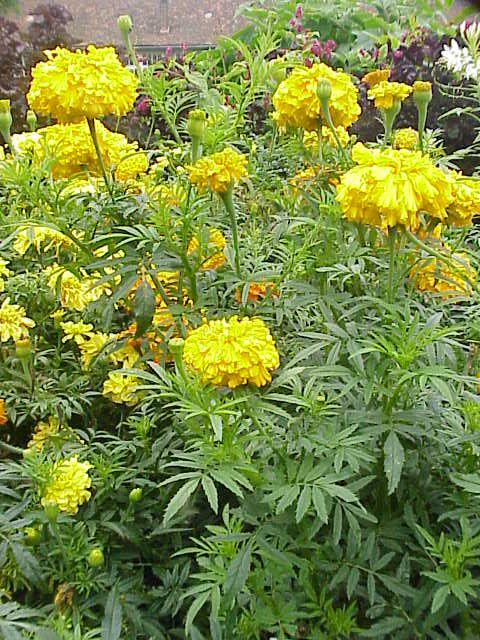
Amarillo (Tagetes erecta L.) Marigold

photo link

Amarillo is an erect, rough, erect, smooth- branched, smelling annual plant growing to about a meter in height. Leaves are deeply pinnatifid ( leaves that have central axis with parts branching off it) about 4 to 11 cm long. The fruit does not open (akene), linear about 6 to 7 mm long.

Amarillo tree is ornamentally cultivated throughout most of the Philippines. The flower is used for medicinal purposes. Below are some of its medicinal uses:

* Decoction of flowers applied externally is effective against colds, eczema, mumps, rheumatism and sore eyes.

* It is used to ease irregular menstruation, abdominal pains connected with menstrual period.

* It is used to cure anemia.

* Alleviates rheumatic muscular and bone pain.

* Taken internally, used for treating constipation, indigestion and dysentery.

Article link: