Sliders

Showing posts with label Fruit. Show all posts

Monday, July 21, 2014

10 Wonderful Exotic Fruits – Part Three

10 more delicious and healthy exotic fruits.

These wonderful exotic fruits are not only healthy and delicious ones – they do have interesting and helpful medicinal properties!

Loquat

photo link

The Loquat (Eriobotrya japonica) is a subtropical evergreen fruit tree native to China. It was introduced into Japan possibly a thousand years ago, and reach California in the 1870’s. Today, loquat trees are also grown in many countries including Mexico, Portugal. Brazil, India, Pakistan, Australia, France, Italy, Israel, Egypt and other Mediterranean countries.

The fruits growing in clusters, are oval about 2.5-5 cm long having smooth yellow or orange skin. The sweet and juicy pulp comes in white, yellow or orange depending on the cultivar. The taste is like a cross between a passion fruit and a guava The fruit may contain three to five large brown seeds. The skin, can be removed easily if the fruit is ripe. The fruit can be eaten raw, preserved dried or stewed. Loquat is rich in vitamin A, dietary fiber, minerals, pectin and anti-oxidants.

Feijoa

photo link

The Feijoa (Acca sellowiana) is a flowering plant that is indigenous to South America. The fruit tree, also called pineapple guava and guavasteen was first cultivated in New Zealand in the early 1900s.The pear-shaped feijoa fruits are about .75-3.5″ in long with waxy skin. The fruit emit’s a strong aromatic scent and taste like a cross of guava and pineapple. Just like guava, the fruit pulp has a gritty texture and becomes gelatinous when ripe. How to eat the fruit? Just cut it in half, then use a spoon to scoop out the pulp. The Feijoa fruit is a good source of fiber, vitamin C, folate, and proanthocyanins, a highly effective antioxidant.

Chontaduro

">photo link

The Chontaduro (Bactris gasipaes), is a palm native to Central and South America. The fruit growing in clusters are harvested from the top of this palm that grows to 20 m or taller. Chontaduro fruit tastes like a cross between roasted chestnuts and baked potato. It may be eaten raw or can be stewed in salted water. The palm fruit is rich in Vitamin C, vitamin A, minerals (calcium, phosphorus, iron) and proteins.

Passion fruit

photo link

The Passion fruit (passiflora edulis) is native to Central America where Brazil is the main producing country. This climbing vine with nearly round or ovoid fruit can grow 15 to 20 ft. The fruit, yellow or dark purple in color; has thick outer skin and inside is a thick mucous-like membrane covering as many as 250 small, black seeds. The fruits are edible and the pulp tastes sweet. If eaten raw, cut the fruit in half and spoon out the pulp. Passion fruit is packed with vitamins A and C, a good source of fiber, and contains potassium and iron. It has also medicinal uses such as easing headaches, ulcers, anxiety, urinary tract infections, and heart attacks.

Black Sapote

photo link

The Black Sapote (Diospyros digyna), also called Black Persimmon, Chocolate-Fruit, is a Tomato-like fruit native in Mexico and Guatemala. It is also grown in Florida, Cuba, Hawaii, The Philippines, and the Dominican Republic. The fruit is shining dark green, about 10 x 13 cm. in size having a firm rind. The edible pulps when ripe are sweet and taste like mild chocolate. The fruit may be eaten raw or use in desserts. Black sapote is rich in vitamin C and a good source of vitamin A, potassium and minerals.

Soursop

photo link

The Soursop (Annona muricata) is an exotic fruit native to tropical America. Today, it is cultivated in many countries in South Asia. The fruit comes in many shapes like oval, round and irregular shapes. This prickly fruits has a white, creamy, juicy flesh that contains an average of 60 to 100 black-brown seeds. As the name suggests, the fruit is sour and acidic in taste. It may be eaten raw or squeezed for juice. The pulp is high in carbohydrates, Vitamin C, Vitamin B1, Vitamin B2, potassium, calcium and dietary fiber. Other names for the fruit include: Graviola in Brazil, Guanabana in Spanish and Guyabano in Filipino.

Guarana

photo link

The Guarana is a flowering shrub native to Venezuela and Brazil. The tree grows to 12 m in high. The bright-red fruit growing in clusters is small (about the size of a coffee bean) and round in shape. The powder of the fruit is bitter when consumed alone but takes a pleasant and delicious taste when mixed with water. The guarana fruit contains about twice the caffeine found in coffee beans. Use as a nutritional supplement, it is an effective energy booster. In Brazil, GuaranĂ¡ syrup is marketed as energy drinks and is used as an ingredient in carbonated soft drinks.

Lychee

photo link

The Lychee (Litchi chinensis), is a medium-sized tropical fruit tree native to parts of China, India, the Philippines, Taiwan, and Indonesia. The fleshy fruits are rather odd-looking; The exterior part of the fruit roughly-textured rind reddish in color, the inside contains a layer of sweet, juicy, translucent white flesh. The flesh is eaten raw or can be added to different dessert dishes. Lychee fruits are low in calories and are cholesterol free. It is rich in vitamin C, dietary fiber and is a good source of B-complex vitamins such as thiamin, niacin and folates.

Camachile

photo link

The Camachile (Pithecellobium dulce), also known as- Guamachil, Madras Thorn, Monkey Pod, Manila Tamarind, Kodukkai Puli/Kodi-kai puli, Kona Puliyankai , Sweet Tamarind, Jungle Jilebi, Bilayati Imli, is nativeto Mexico, Central Asia, Guam, India, Philippines, Caribbean, and Florida. The tree grows to about 5 to 8 m and bears greenish-white, flowers 12 cm (4.7 in) long. The flowers produce an edible, curved or twisted pods about 12 cm long. The seeds are black. The seedpods can be eaten raw or prepared as a beverage. Camachile is used in treating Venereal diseases and is also prescribed for diabetics.

Durian

photo link

Durian known in southeast Asia as the “king of fruits”, is native to Malaysia, Brunei, Philippines and Indonesia. The fruit growing to about 30 centimeters long and weighing from one to three kilograms is oblong to round in shape. The edible pulp emits an indescribable odor. Durian is a highly nutritious fruit because it is rich in vitamin B, C and E and is a good source of carbohydrates, proteins, and fats.

Thursday, April 11, 2013

Easy Do It Yourself (Diy) for Your Body

Help yourself with these treats that are 100% good for you!

Get the benefits of a relaxing massage sans the privy spa. Try giving yourself a spot massage! DIY massages are quick and easy. Just pick a body part and knead, knead, knead your way to stress-free heaven.

Pain in the back?

photo link

Got a stiff neck? Try this soothing stroke. Start on the right side by pressing the fingers of your left hand into your neck, just below the base of your skull. Slowly drag your fingers down to your right shoulder while tilting your head to the left. As your left hand moves from neck to shoulder, your left ear should approach your left shoulder. Repeat this motion several times, then switching hands and work on your left side.

Back me up!

photo link

Sore upper back? Loosen up those knots with these smooth moves! While seated, lift your right hand and point your elbow upward. Let your right hand dangle behind you, just below your head. Then squeeze the three middle fingers of your left hand together and press these fingertips against the right side of your upper back. Stroke down your right side, moving towards your waist. Repeat this motion several times, then switch hands and work on your left side.

Go foot loose!

photo link

Give your tired tootsies some relief. While seated, rest your left foot on your right thigh, forming a figure four. Hold your left ankle with your left hand, and slowly rotate the foot with your right hand. Rotate clockwise, starting with small circles but shifting to larger ones. Then rotate counter-clockwise. Next, hold your foot with both hands and make lengthwise strokes., firmly pressing into it with your thumbs. You can also use those thumbs to make tiny circles on the sole and arch. Try pulling gently on your toes, first sideways, then forward and back. Now work on the other foot.

Have your own juice bar!

photo link

Forget about the coffee and soda. Next time you need a thirst-quencher, mix up your own fruit shake. These concoctions are just as yummy but twice as healthy! Pick one from below and check out the ingredients. Then combine all the ingredients in a blender and blend till smooth and thick. Bottoms up!

Tutty-fruity Slush

You’ll need: 1 medium-sized banana, ½ cup quartered strawberries, ½ cup pineapple or mango (cut into chunks, ¾ orange juice, and 1 cup of crushed ice.

Low-calorie Banana Smoothie

You’ll need: ¼ cup non-fat powdered milk, ¾ cup water, 1 banana, and four crushed ice cubes.

Orange and Banana Crush

You’ll need: 1/3 of an orange (sectioned), 1/3 of a banana (cut into chunks), 2 ounces of pineapple juice, 1/3 cup crushed ice and ½ tbsp. honey.

Thursday, March 28, 2013

Philippine’s Medicinal Plants Part Two

Here is the next list of Philippine’s backyard plants that also have medicinal properties.

The Philippines is blessed with more than 500 medicinal plants, and below is another list of 10 medicinal plants approved by the Philippine Department of Health (DOH) as an alternative medicine in treating particular disorders.If you haven't read the previous list then here's the link: The Philippines 10 Most Promoted Medicinal Plants

Abukado (Persea americana)-Avocado

photo link

The tree may be erect and grows up to 10-15 meters high with alternately dark-green leathery leaves. The flowers are small greenish-yellow about 5 – 10 millimeters wide. The pear-shaped fruit with a large central seed, can grows up to 20 centimeters long, and weighs between 100 – 1,000 grams. Avocado typically grown from seeds, but may be propagated by grafting, marcotting and budding.

Avocado fruit is a good source of potassium, fiber, vitamins A, B,C and D. For medicinal purposes, the fruit, leaves and seeds are use.

Here are some medicinal uses of avocado:

* The leaves and the bark are used to treat coughs.

* The leaf decoction is good for treating sore throat, diarrhea, dysentery, and hemorrhage.

* The leaves are chewed as a cure for pyorrhea (gum inflammation with discharge of pus)

* The leaf juice has antibiotic activity.

* A warm moist preparation of leaves are applied on wounds.

* Applying heated leaves on the forehead ease nerve pain.

* The leaves and bark regulate menstruation.

* Decoction of powdered seeds effective for toothaches and used to treat osteoarthritis.

* Avocado tea used to treat worms.

* Ripe fruit flesh ease sunburned skin while pulverized seeds good for dandruff.

* Avocado oils good for treating infections, wounds and arthritis.

Atsuete (Bixa orellana Linn) Lipstick plant/ Annatto

photo link

Achuete is a shrub that grows to 4-6 meters. The plant with shiny heart-shaped leaves, bears white or pinkish and bright red spiny fruits containing small red seeds. It is best known as the source of the natural pigment annatto, produced from the fruit.

Achuete is cultivated throughout the Philippines. Aside from its culinary uses, achuete also has many medicinal uses where the leaves, barks and seeds are utilized. Here are some:

* For treating burns, fresh leaves boiled in water is effective. Let the water cool down and then soak the affected areas for 10 minutes once a day.

* Seeds’ pulp ease blistering and scarring.

* Moistened fresh seeds are effective in the treatment of red rashes.

* A mixture of the leaves effective as purgative.

* Poultice of leaves used for treating gonorrhea.

* Decoction of leaves ease vomiting and effective for nausea.

* Decoction of leaves regulate menstruation.

* Leaves are antidote for snake bites.

* A mixture of warm coconut oil and is applied on the forehead for headaches.

Atis (Anona squamosa Linn.) Sugar apple

photo link

Sugar-apple (also called atis in Tagalog) is a semi-evergreen shrub that grows up 3 to 5 meters high. The leaves are alternate, oblong, 5 to 17 cm long and about 2 to 5 cm wide. The flowers are light green to yellow about 2.5 cm long with three large petals. The fruit is round, large and somewhat heart-shaped, 6–10 cm in diameter and weighs between 100–230 g. When ripe, the fruit is sweet, white to light yellow, with delicious and juicy flesh.

The plant is grown throughout the Philippine. For medical purposes, the leaves, fruits and seeds are used. Here are some of sugar apple’s medicinal uses:

* Leaves are effective in the treatment of skin itches.

* Decoction of salted leaves aid to speed up suppuration.

* Bark decoction is effective in the treatment of diarrhea.

* Leaves or roots offer purgative action.

* Leaf decoction alleviate pain if used for rheumatic baths.

* Crushed fresh leaves applied over nose is effective for treating fainting and hysteria.

* Juice extracted from unripe fruit is good for insect bites.

* Decoction of leaves used in treating dysentery.

* Decoction of the leaves used to treat colds and ease digestive problems

Apatot (Morinda citrifolia) Indian Mulberry

photo link

Indian Mulberry is a small tree or an evergreen shrub growing to 5-10 meters high. The leaves are simple, elliptic and oppositely arranged about 15-25 cm long. The flowers are white, scented, tubular about 2-3 cm long. It has yellowish fruit about 2-2.5 cm diameter that has a pungent odor when ripening. Apatot are found along or near seashores, throughout the Philippines. For medicinal uses roots, bark, leaves are utilized.

Medicinal Uses:

* Flowers, fruits, leaves and bark are used to treat eye skin wounds, gums and eyes problems.

* Fresh leaves are used to ease ulcers.

* Heated leaves applied to the chest are best for fever, coughs, stomach pains, constipation, nausea.

* Decoction of charred leaves used to treat diarrhea.

* Fruit pulp used to make a shampoo.

* Decoction of leaves are good tonic drink.

* Juice from leaves used to treat arthritis.

* Juice of over-ripe fruit or leaves are known to combat diabetes.

* Fruit juice effective as a gargle for sore throats.

* Juices of over-ripe fruits used to ease urinary problems.

* The bark or leaves, used to treat muscle and joint pain

Aratiles (Muntingia calabura Linn) Jamaican cherry

photo link

Aratiles is a small tree that grows 7-12 meters with spreading branches. It has hairy, sticky, jagged leaves about 8 to 12 cm. long and 1 to 6.5 cm. wide. The flowers are white, small and slightly scented about 2 cm in diameter. The berry fruit is light red, edible, sweet and fleshy about 1.5 cm diameter. The tree is widely distributed in the Philippines. For medicinal purposes, the bark, leaves and flowers are used.

Medicinal uses:

* It is used for treatment of headaches and colds.

* Decoction of flowers used to relieve abdominal cramps.

* Decoction of flowers used for treatment of spasms and a good antiseptic.

Anonas (Anona reticulata Linn) Custard apple

photo link

The Custard Apple tree is a small, deciduous, and erect tree that reaches up to 10 meters tall. The leaves are shiny, alternate and oblong that grows up to 20 cm. Flowers are greenish-yellowish in color, fragrant and about 2 to 2.5 cm long. The fruit about 8-16 cm long is brownish-yellow and heart-shaped. All parts of this plant have medicinal values such as:

* The unripe fruit good for relieving diarrhea and dysentery

* Warm leaves is used to treat indigestion.

* The tree bark is used for treating skin diseases.

* The seed bark is astringent.

* Dried and powdered unripe fruit used for diarrhea and dysentery.

* The roots fights against epilepsy.

* Crushed leaves used as poultice is good for ulcers, boils and abscesses.

* Decoction of root bark are placed around the gums to ease toothache.

* The fruit is useful in treating anemia.

Alugbati (Basella rubra Linn) Malabar Nightshade

photo link

Alugbati is a succulent, fast-growing, herbaceous vine that grows up to 10 m in length. Its heart-shaped leaves is soft, thick, juicy, tasty grows 5 to 12 cm long. Alugbati grows in settled and cultivated areas, in hedges. Aside from its nutritional value such as: a good source of vitamins A, B, and C, excellent source of calcium and iron, Alugbati also has some medicinal uses.

* Roots are used as rubefacient (reddens the skin).

* Pulped leaves poultice used to ease swelling.

* Sap used to diminish acne eruptions inflammation.

* Decoction of leaves alleviate digestive discomfort due to loose bowel movement.

* Pulped leaves used for treatment of boils to accelerate suppuration.

Ayapana (Eupatorium triplinerve Vahl) White snakeroot

photo link

Ayapana is a small, erect, perennial herb that reaches 30 to 60 cm. in height.Leaves are smooth, barely elliptic, opposite, distantly toothed that grows 20 to 30 cm high. The 6-13 mm flowering heads bear as much as 20 pinkish flowers about 6 to 7 millimeters long. Ayapana is widely distributed in the Philippines. When used for medicinal purposes, leaves, flowers, and the whole plant itself are utilized.

* Used for treating digestive problems such as stomachaches, gastric ulcers and bowel disorders.

* Effective for relieving colds, coughs, sore throat, bronchitis and other lung problems.

* Used for cuts, scrapes and wounds.

Adelfa (Nerium indicum Mill.) South Sea Rose

photo link

Adelfa is a small, smooth, evergreen trees that grows up to 4 meters high. The leaves are simple, opposite with numerous horizontal nerves, about 10-15 cm long. 10-15 cm long. The fruit is cylindrical in shape, paired with deep stripy patterns about 15 to 20 centimeters long. The fruit bears many seeds that are generally flat with a clump of fine, shining, white, silky hairs. Adelfa is widespread in the Philippines. For medicinal uses, the bark and leaves are used.

* Decoction of leaves use as poultice effective against snake bites.

* Paste made from roots used externally for hemorrhoids, chancres and ulcer.

* Roots and bark applied externally used for eczema, scabies and other skin diseases.

* The root is effective in stopping inflammation.

* The leaves and flowers used for cough, malaria, dysmenorrheal and internally used for abortion.

* The whole plant is believed to have anti-cancer properties.

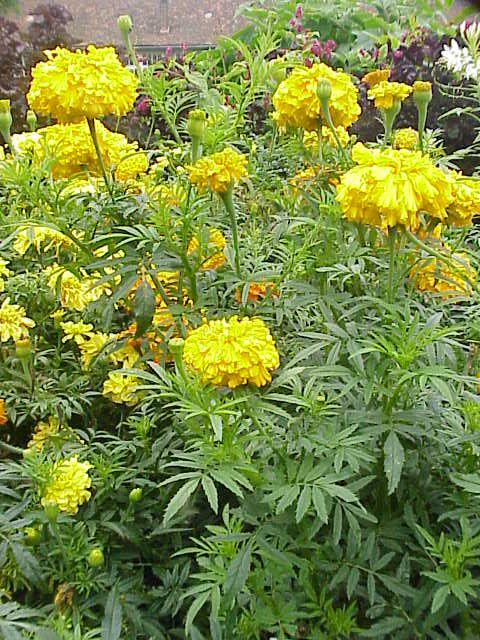
Amarillo (Tagetes erecta L.) Marigold

photo link

Amarillo is an erect, rough, erect, smooth- branched, smelling annual plant growing to about a meter in height. Leaves are deeply pinnatifid ( leaves that have central axis with parts branching off it) about 4 to 11 cm long. The fruit does not open (akene), linear about 6 to 7 mm long.

Amarillo tree is ornamentally cultivated throughout most of the Philippines. The flower is used for medicinal purposes. Below are some of its medicinal uses:

* Decoction of flowers applied externally is effective against colds, eczema, mumps, rheumatism and sore eyes.

* It is used to ease irregular menstruation, abdominal pains connected with menstrual period.

* It is used to cure anemia.

* Alleviates rheumatic muscular and bone pain.

* Taken internally, used for treating constipation, indigestion and dysentery.

Article link: